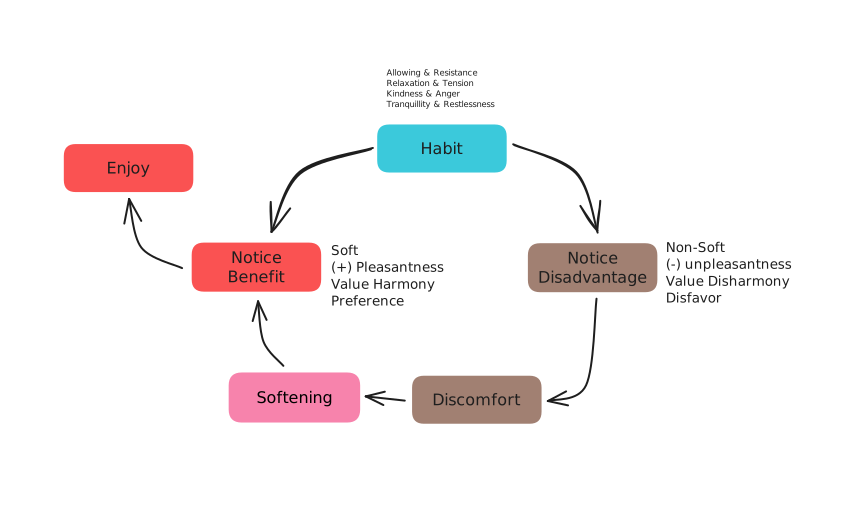
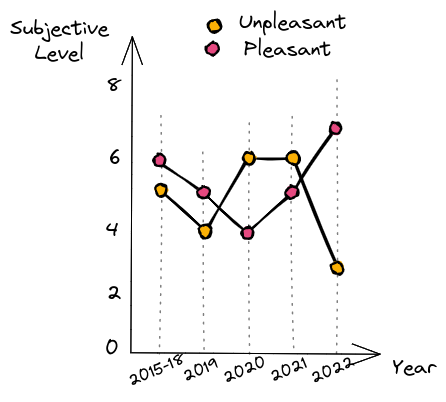
# Practice Guide

## [Skill Guide](/practice-guides/skills/foundational-skills)

<table data-view="cards"><thead><tr><th align="center"></th><th></th><th data-hidden data-card-target data-type="content-ref"></th><th data-hidden data-card-cover data-type="files"></th></tr></thead><tbody><tr><td align="center"><strong>Foundation Practice</strong></td><td>Core practice that supports and guides all others</td><td><a href="/practice-guides/skills/foundational-skills">Foundational Skills</a></td><td><a href="https://2476744396-files.gitbook.io/~/files/v0/b/gitbook-x-prod.appspot.com/o/spaces%2FFtfcR0gXrnJrT6J9QcUt%2Fuploads%2FsPXFt8kQNNUtc6nMsLul%2Ffile.excalidraw.svg?alt=media&amp;token=48ed8412-489e-41b4-9480-987520b71fcb">file.excalidraw.svg</a></td></tr><tr><td align="center"><strong>Equanimity</strong></td><td>Allowing sensory phenomena to come and go, without pushing or pulling</td><td><a href="/practice-guides/skills/equanimity">Equanimity</a></td><td><a href="https://2476744396-files.gitbook.io/~/files/v0/b/gitbook-x-prod.appspot.com/o/spaces%2FFtfcR0gXrnJrT6J9QcUt%2Fuploads%2FP35xSkLChjh3a5nleATg%2FEquanimity.png?alt=media&amp;token=478dc6b6-9b12-4f68-bbde-db4df65b24f4">Equanimity.png</a></td></tr><tr><td align="center"><strong>Conditioning</strong></td><td>Cultivate positive responses to sensory phenomena</td><td><a href="/practice-guides/skills/conditioning">Conditioning</a></td><td><a href="https://2476744396-files.gitbook.io/~/files/v0/b/gitbook-x-prod.appspot.com/o/spaces%2FFtfcR0gXrnJrT6J9QcUt%2Fuploads%2FOWc1ihTrkhn7ubS1CUag%2FConditioning.png?alt=media&amp;token=591bbaff-b628-492a-8825-15f9e46339a1">Conditioning.png</a></td></tr><tr><td align="center"><strong>Sensory Clarity</strong></td><td>Recognize, distinguish, and explore the behavior of sensory phenomena</td><td><a href="/practice-guides/skills/sensory-clarity">Sensory Clarity</a></td><td><a href="https://2476744396-files.gitbook.io/~/files/v0/b/gitbook-x-prod.appspot.com/o/spaces%2FFtfcR0gXrnJrT6J9QcUt%2Fuploads%2FVPa3DBuqI8v79xcl30dY%2FSensory%20Clarity.png?alt=media&amp;token=55d56d6e-cd63-4f9a-827f-c3b8ba73b4ed">Sensory Clarity.png</a></td></tr><tr><td align="center"><strong>Attention</strong></td><td>Choose what, when, and how you observe</td><td><a href="/practice-guides/skills/attention">Attention</a></td><td><a href="https://2476744396-files.gitbook.io/~/files/v0/b/gitbook-x-prod.appspot.com/o/spaces%2FFtfcR0gXrnJrT6J9QcUt%2Fuploads%2FseNAhpHxEBzx799Zh3V5%2FAttention.png?alt=media&amp;token=cfb88358-b657-40b8-b68d-39089488469d">Attention.png</a></td></tr><tr><td align="center"><strong>Applied Skills</strong></td><td>Learning to apply skills to everyday opportunities and challenges</td><td><a href="/practice-guides/skills/applied-skills">Applied Skills</a></td><td><a href="https://2476744396-files.gitbook.io/~/files/v0/b/gitbook-x-prod.appspot.com/o/spaces%2FFtfcR0gXrnJrT6J9QcUt%2Fuploads%2Fg7hQO39yTXNACmlzsAEf%2FWebsite%20Visual%20Applied%20Skills.png?alt=media&amp;token=bc8a3b44-5143-47a2-a1fd-27c3bf700101">Website Visual Applied Skills.png</a></td></tr></tbody></table>

## [Offerings](/sessions/individual-guidance)

<table data-view="cards"><thead><tr><th></th><th data-hidden data-card-cover data-type="files"></th><th data-hidden data-card-target data-type="content-ref"></th></tr></thead><tbody><tr><td><strong>Individual Guidance</strong></td><td><a href="https://2476744396-files.gitbook.io/~/files/v0/b/gitbook-x-prod.appspot.com/o/spaces%2FFtfcR0gXrnJrT6J9QcUt%2Fuploads%2FjEdu35ynrclVdDmxZ77H%2FIndividual%20Guidance.png?alt=media&amp;token=58e8b46b-5d21-43fc-9fd4-7fbe0398620a">Individual Guidance.png</a></td><td><a href="/sessions/individual-guidance">Individual Guidance</a></td></tr><tr><td><strong>Weekly Group Sessions</strong></td><td><a href="https://2476744396-files.gitbook.io/~/files/v0/b/gitbook-x-prod.appspot.com/o/spaces%2FFtfcR0gXrnJrT6J9QcUt%2Fuploads%2FNf4ayVk2jflAYwtBrJAQ%2FWeekly%20Group%20Sessions.png?alt=media&amp;token=7ecbe3fc-6814-4268-85ee-7c7c2b308ee2">Weekly Group Sessions.png</a></td><td><a href="/sessions/weekly-group-session">Weekly Group Session</a></td></tr><tr><td><strong>Retreat</strong></td><td><a href="https://2476744396-files.gitbook.io/~/files/v0/b/gitbook-x-prod.appspot.com/o/spaces%2FFtfcR0gXrnJrT6J9QcUt%2Fuploads%2FtPn0qBatkw8f6bihZ4Uh%2FRetreat.png?alt=media&amp;token=bfc5e4e4-c24d-4bd3-9deb-a4ee19e8f834">Retreat.png</a></td><td><a href="/sessions/retreat">Retreat</a></td></tr></tbody></table>

## [Join the Newsletter](https://dashboard.mailerlite.com/forms/386282/84430404259416026/share)&#x20;

New Practices & Videos, Courses & Retreats

{% embed url="<https://dashboard.mailerlite.com/forms/386282/84430404259416026/share>" %}


# Foundational Skills

Core that supports and guides all others

## Introduction

{% embed url="<https://youtu.be/egb4keTe1Vc>" %}

## Guided Practice - Foundation

{% embed url="<https://youtu.be/ZVr41sDBk7I>" %}

## Practice Visualization

<img src="https://2476744396-files.gitbook.io/~/files/v0/b/gitbook-x-prod.appspot.com/o/spaces%2FFtfcR0gXrnJrT6J9QcUt%2Fuploads%2FpXduO2MFSIvzRy7EyDZX%2Ffile.excalidraw.svg?alt=media&amp;token=28ccdab7-19a1-4f67-9fde-a22f53ffc690" alt="" class="gitbook-drawing">

## Overview - Skills

<table><thead><tr><th width="153">Name</th><th>What</th><th>Benefit</th></tr></thead><tbody><tr><td><a href="/practice-guides/skills/equanimity">Softening</a></td><td>Our return base which is based on releasing excessive effort</td><td><ul><li>Facilitates Virtue</li><li>Independent happiness i.e., based on letting go</li><li>Decondition Vices</li></ul></td></tr><tr><td><a href="/practice-guides/skills/sensory-clarity/causality">Curiosity</a></td><td>Interest towards the causal relationship</td><td><ul><li>Understanding &#x26; directly experiencing Causality </li><li>Facilitates improvement as we understand the causes to apply or remove </li></ul></td></tr><tr><td><a href="/practice-guides/skills/sensory-clarity/enchantment-and-disenchantment">Enchantment</a></td><td>Perceiving the benefit</td><td><ul><li>Facilitate virtues &#x26; hinder vices </li><li>Automating behavior</li></ul></td></tr><tr><td><a href="/practice-guides/skills/sensory-clarity/enchantment-and-disenchantment">Disenchantment</a></td><td>Perceiving the disadvantage</td><td><ul><li>Hinder vices &#x26; facilitate virtues </li><li>Discouraging automated behavior</li></ul></td></tr><tr><td><a href="/practice-guides/skills/sensory-clarity/auto">Perspective Auto</a></td><td>Recognising that everything is happening by it self, caused by specific conditions, outside your control</td><td><p></p><ul><li>Facilitates Attitude of Offering > Forcing</li><li>Facilitates Softness </li><li>Facilitates independent happiness</li><li>Facilitates Virtue</li><li>Hinders Vices</li><li>Facilitates Understanding of Causality</li><li>Perceiving oneself as an aggregate of habits that can be improved upon</li></ul></td></tr><tr><td><a href="/practice-guides/skills/sensory-clarity/best-opportunity">Perspective Best Opportunity</a></td><td>Perceiving every moment as an opportunity to improve upon</td><td><ul><li>Facilitates inspiration to cause good</li><li>Facilitates being happy &#x26; optimistic</li><li>Hindering the habituated response of perceiving problems with dread, suffering, pessimism</li></ul></td></tr><tr><td><a href="/practice-guides/skills/conditioning">Virtue</a></td><td>Habits that are based on and strengthened by softness and in harmony with your values </td><td><ul><li>Recognize Virtue </li><li>Cultivating Virtue</li></ul></td></tr><tr><td><a href="/practice-guides/skills/conditioning">Vice</a></td><td>Habits that are based on non-softness and weakened by softness, and in disharmony with your values</td><td><ul><li>Recognize Vice</li><li>Decondition Vices</li></ul></td></tr></tbody></table>

## Overview - Practice Instructions

<table><thead><tr><th width="142"></th><th></th></tr></thead><tbody><tr><td><strong>Benefits</strong></td><td><ul><li>Enjoyable, facilitating and compounding development in happiness and virtue</li><li>Facilitating the hindering and deconditioning of suffering and vice</li><li><p>Positive Attitude towards one's values</p><ul><li>Causality &#x26; Auto: 'What are the causes that will positively influence this?'</li><li>Best Opportunity: 'What is the best next step?'</li><li>Reward > Penalty</li></ul></li></ul></td></tr><tr><td><strong>Instructions</strong></td><td><p></p><p><strong>Establishing the Base</strong></p><ol><li>Establishing a base of softness</li><li>Enchanting with Softness</li></ol><p><strong>Cultivating Virtue</strong></p><ol><li>Activate Virtue or Virtue automatically arises</li><li>Soften into the virtue</li><li>Enchant with Virtuous Softness</li></ol><p><strong>Decondition Vices</strong></p><ol><li>Activate Vice or Vice automatically arises</li><li>Disenchant with Vice</li><li>Soften into the Vice</li><li>Enchant with Softness</li></ol><p></p></td></tr><tr><td><strong>Daily Life</strong></td><td><p>The practice can be applied in any situation in life</p><ul><li>Continue to recognize Softness, Non-Softness, Virtue and Vice</li><li>Soften, Enchant, or Disenchant</li></ul></td></tr><tr><td><strong>Consider</strong></td><td><ul><li><p>Remember the perspective of 'best opportunity'</p><ul><li>'What is the best next step I can take?'</li><li>Enjoy this opportunity </li></ul></li><li><p>Remember the perspective of 'Auto'</p><ul><li>As this is happening all by itself, how can I best support positive change?</li></ul></li><li>Softening is the opposite of trying. Whenever you notice trying or struggling, release the effort underlying it.</li></ul></td></tr><tr><td><strong>Progress</strong></td><td><ul><li>Becoming sensitive to what it feels like to experience softness and virtue compared to non-softness and vice</li><li>Ability to soften and enchant with softness and virtue</li><li>Ability to soften &#x26; disenchant with vice</li><li>Perceiving causality &#x26; 'auto' in your sensory experience and the external world</li><li>Being glad that you can improve upon the current situation ('best opportunity')<br></li></ul></td></tr></tbody></table>


# Equanimity

Allowing sensory phenomena to come and go, without pushing or pulling

{% embed url="<https://www.youtube.com/watch?v=PYcyo6KHHVU>" %}

{% content-ref url="/pages/mlaXF92b2vayY5y2bUKm" %}
[1 Calm & Overwhelm](/practice-guides/skills/equanimity/1-calm-and-overwhelm)
{% endcontent-ref %}

{% content-ref url="/pages/CEnQFx1jHN8UGy4FQshd" %}
[2 Physical Softness & Restlessness](/practice-guides/skills/equanimity/2-physical-softness-and-restlessness)
{% endcontent-ref %}

{% content-ref url="/pages/ehaQHRSyLZglGChrKMCf" %}
[3 Mental Softness & Restlessness](/practice-guides/skills/equanimity/3-mental-softness-and-restlessness)
{% endcontent-ref %}

{% content-ref url="/pages/Va3sZ2enRWE9DBG16xcb" %}
[4 Joyful Contentment & Dryness](/practice-guides/skills/equanimity/4-joyful-contentment-and-dryness)
{% endcontent-ref %}

{% content-ref url="/pages/bPXTO3pLJ6T8ffzPyAkr" %}
[5 Softening](/practice-guides/skills/equanimity/5-softening)
{% endcontent-ref %}


# 1 Calm & Overwhelm

Cultivating the skill in noticing & improving breathing patterns to facilitate calm

## Understanding Diaphragmatic Breathing

{% embed url="<https://www.youtube.com/watch?v=H7b1ROrg6Bc>" %}

## Practice Visual

<img src="https://2476744396-files.gitbook.io/~/files/v0/b/gitbook-x-prod.appspot.com/o/spaces%2FFtfcR0gXrnJrT6J9QcUt%2Fuploads%2FBqSqkvAX7nccWoiVlapY%2Ffile.excalidraw.svg?alt=media&amp;token=8ca9049d-cea9-437f-92ed-36c3bdc80cd2" alt="" class="gitbook-drawing">

## Practice Progression

### 1.1 - Learning the Four Phases

{% embed url="<https://youtu.be/INq2yOPe5DI>" %}

### 1.2 - Slowing Down

{% embed url="<https://youtu.be/woZjxWXjTSo>" %}

### 1.3 - Finding Enjoyment

{% embed url="<https://www.youtube.com/watch?v=4Q_h8sH2Fj4>" %}

## Complete Practice

### Diaphragmatic Breathing - Long Version

{% embed url="<https://youtu.be/k5ExmUK_kIA>" %}

### Diaphragmatic Breathing - Short Version

{% embed url="<https://youtu.be/eHfTcp7UI6w>" %}

## Core Instructions

<table><thead><tr><th width="142"></th><th></th></tr></thead><tbody><tr><td><strong>What</strong></td><td>Automating diaphagmatic breathing away from non-diaphragmatic stress breathing to calm overwhelm, weaken anxiety and access safety and calm</td></tr><tr><td><strong>Benefits</strong></td><td><ul><li>Anxiety weakens &#x26; Safety strengthens</li><li>Ability to Calm Overwhelm</li><li>Breath is enjoyable, calming and relaxing</li><li>Ability to access deep relaxation</li></ul></td></tr><tr><td><strong>Progress</strong></td><td><ul><li>Recognizing breathing patterns</li><li>Calming Diaphragmatic Breathing becomes natural way of breathing > stress-breathing</li><li>Breath is enjoyable, calming, relaxing<br></li></ul></td></tr><tr><td><strong>Instructions</strong></td><td><p></p><ol><li><p><strong>Diaphragmatic Breaths (Lower Belly in Lying Posture)</strong></p><ul><li>Intentional gentle slow diaphragmatic breaths</li><li>Lying Posture: Allowing the belly to inflate &#x26; deflate</li><li>Non-Lying Posture: Allow the diaphragm to expand and the body to respond with whatever feels comfortable i.e., belly / ribs / chest expanding</li></ul></li><li><p><strong>Ribs Breaths</strong></p><ul><li>Starting with DPB, then allowing the air to fill the ribs</li></ul></li><li><p><strong>Complete  Breaths</strong></p><ul><li>Starting with DPB, followed by ribs, then allowing the air to fill up the chest</li></ul></li><li><p><strong>Natural Diaphragmatic Breaths</strong></p><ul><li>Letting go of any intentional breathing</li><li>Being curious and observing  how the diaphragm naturally engages</li><li>Teaching the mind a calmer way of breathing, by experiencing and enjoying the relaxation from it</li></ul></li></ol></td></tr><tr><td><strong>Consider</strong></td><td><p><strong>Lightheaded or Dizzy</strong></p><ul><li>This may be a common sign of adjustment to a new way of breathing. Pause  &#x26; breathe naturally again until you feel ready, then start again.</li></ul><p><strong>Strain</strong></p><ul><li>This may be a sign of excessive effort. Bring an attitude of gentleness and allowing the body to welcome your suggestions, rather than of struggling or forcing.</li></ul><p><strong>Felt-Sense > Anatomical Obsession</strong></p><ul><li>The aim is to have a diaphragm that moves relaxed, not tense due to fear-response. </li><li>While rested the diaphragm moves slowly. While cardio-active the diaphragm moves quicker. </li><li>In a lying posture the diaphragm moves maximum-downward and the belly expands. In a posture with more muscular activation such as walking the diaphragm will move less downwards i.e., more thoracic movement as a compensation<br></li></ul></td></tr><tr><td><strong>Daily Life</strong></td><td><ul><li>Notice your breathing patterns throughout the day</li><li>When non-diaphragmatic breathing is occurring (during a non-cardiovascular activity), practice 5 gentle slow diaphragmatic breaths to retrain your breathing pattern in the moment</li></ul></td></tr><tr><td><strong>Acknowledgement</strong></td><td><a href="www.midlmeditation.com">MIDL</a></td></tr></tbody></table>

## Progress

<table><thead><tr><th width="140">-</th><th>Level 1 - Non-skilled</th><th>Level 2 - Skilled</th><th>Level 3 - Maturity</th></tr></thead><tbody><tr><td><strong>Variables</strong></td><td><ul><li>Unaware of breathing patterns</li><li>DBP is not default</li><li>Unable  to  engage DP</li><li>Breathing does not feel relaxing &#x26; calming</li></ul></td><td><ul><li>Aware of breathing patterns</li><li>DPB is mostly default</li><li>Able to engage DP</li><li>DBP feels relaxing &#x26; calming</li></ul></td><td><ul><li>Aware of breathing patterns</li><li>DPB is default in all non-cardio situations</li><li>DPB feels calming and relaxing</li></ul></td></tr><tr><td><strong>Example</strong><br>Being Nervous</td><td><ul><li>Engaged in chest or 'stress' breathing which supports anxiety and discomfort.</li><li>Unaware of it.</li></ul></td><td><ul><li>Engaged in stress breathing</li><li>Aware of it &#x26; intentionally retraining breathing pattern towards DPB</li><li>Accessing relaxation and calm</li></ul></td><td><ul><li>DPB is engaged providing relaxation and calm. </li><li>Aware of it.</li></ul></td></tr></tbody></table>

## Questions & Answers

<details>

<summary>Q&#x26;A</summary>

**How do I know I am having diaphragmatic breathing?**

* Breathing feels safe, deep, calming and relaxing rather than shallow,  restless, tense&#x20;
* During Cardio-Rest: Diaphragm moves slowly rather than fast
  * During Cardio-Activity: Diaphragm movies quicker&#x20;
* Lying Posture
  * Belly lifts as the diaphragm moves down
  * Thoracic movement secondary

**How do I know I am having stress-breathing i.e., less-diaphragmatic (during cardio-rest)?**&#x20;

* Stress breathing means the diaphragm is tensing up and not moving as much downward
* Breathing becomes shallow rather than deep
* Thoracic Expansion becomes primary
* Lying Posture
  * Belly does not lift as the diaphragm does not move down
  * Thoracic movement primary

**How should I breath while in a standing or cardio-active posture?**

* Important is that your body/mind are feeling safe i.e., diaphragm is moving freely
* Standing/Muscular Activation
  * As there is increased muscular activation in standing or cardio activities the diaphragm has less mobility i.e., thoracic expansion will become greater
* During Cardio
  * Body focuses on air exchange i.e., increases rate of breath
  * Breaths become quicker, more shallow, more thoracic

**Is diaphragmatic breathing always belly breathing (cardio-rest)?**

* Lying Posture: Yes
* Posture with more muscular activation (seated, standing, walking, exercise)
  * The diaphragm will move freely as long as organs, muscles are not impeding it
  * Usually the more muscular activation there is the less the diaphragm will move downward, the less the belly will expand
  * For this reason we practice rib & chest breathing to allow our body and mind to learn how to breath gently, adapting to the circumstance

**Anatomy: What happens during breathing?**&#x20;

* Inhale
  * Diaphragm contracts&#x20;
  * Diaphragm flattens
  * Diaphragm moves downward
  * Providing more space for the lungs to expand
    * Increased lung volume allows air to flow into lungs
* Exhale
  * Diaphragm relaxes
  * Diaphragm returns into 'dome-like' resting position
  * Diaphragm moves upwards
  * Providing less space for the lungs, lungs contracting
    * Decreased lung volumes supports air to leave the body
* Accessory Breathing Muscles are around the thoracic cavity e.g., intercoastal rib muscles
  * They help to expand and contract the rib cage as well
  * Inhale, rib expands
  * Exhale, rib contracts

</details>


# 2 Physical Softness & Restlessness

Cultivating the skill in relaxing physically via noticing & releasing of effort

## Understanding Softening

{% embed url="<https://www.youtube.com/watch?v=PYcyo6KHHVU>" %}

## Practice Visual

<img src="https://2476744396-files.gitbook.io/~/files/v0/b/gitbook-x-prod.appspot.com/o/spaces%2FFtfcR0gXrnJrT6J9QcUt%2Fuploads%2F0R1mWhfbca8RdP7tCOGa%2Ffile.excalidraw.svg?alt=media&amp;token=38918e82-793d-43c5-9e1f-ea395cfc9e9b" alt="" class="gitbook-drawing">

## Practice Progression

### 2.1  Recognizing Physical Effort

{% embed url="<https://youtu.be/2zIwW_oZmtI>" %}

### 2.2 Releasing Physical Effort

{% embed url="<https://youtu.be/uQpG9Kk6l94>" %}

### 2.3 Enjoying Release of Physical Effort

{% embed url="<https://youtu.be/lJEubCC06Hk>" %}

## Complete Practice - Softening Physically

{% embed url="<https://youtu.be/vk3Ur2OczzY>" %}

## Core Instructions

<table><thead><tr><th width="141"></th><th></th></tr></thead><tbody><tr><td><strong>What</strong></td><td>Relaxing Physically by releasing the cause of tension i.e., the effort underlying, rather than tension</td></tr><tr><td><strong>Benefits</strong></td><td><ul><li>Physical Relaxation</li><li>Recognizing when Physical Restlessness is present</li><li>Recognizing 'Effort' within Body</li></ul></td></tr><tr><td><strong>Progress</strong></td><td><ul><li>Sensory Clarity to necessary &#x26; excessive effort underlying physical tension</li><li>Ability to release excessive effort</li><li>Ability to enjoy the release of effort</li><li>Ability to physically relax</li></ul></td></tr><tr><td><strong>Instructions</strong></td><td><p><strong>Phase 1 - Party by Part</strong></p><ol><li>Tense part for ~5-10s &#x26; Notice underlying effort</li><li>Release effort &#x26; notice reduced effort</li><li>Enjoy relief</li><li>Repeat until practiced with every part of the body</li></ol><p></p><p><strong>Phase 2 - Choiceless</strong></p><ol><li>Notice any excessive effort within your body </li><li>Tense part &#x26; notice  effort</li><li>Release part &#x26; notice reduced effort</li><li>Enjoy relief</li></ol><p></p></td></tr><tr><td><strong>Consider</strong></td><td><p></p><p><strong>Effort over Tension</strong></p><ul><li>Focus is the effort underlying tension and the release of effort rather than tension or relaxation</li><li>This will minimize superficial relaxation and contact the more fundamental cause of tension.</li><li>Some tensions will remain, as they are not based on excessive effort</li></ul><p></p><p><strong>No harm - remain comfortable</strong></p><ul><li>No need to flex excessively. As long as you can notice the experience of having excessive effort.</li><li>Avoid areas with injuries</li></ul><p></p><p><strong>Enjoy :)</strong></p><ul><li>Pointing your mind towards the benefit of releasing of effort via enjoying the experience</li></ul><p></p></td></tr><tr><td><strong>Daily Life</strong></td><td><ul><li>Check in throughout the day about any tension and their excessive underlying effort</li><li>Release the effort, enjoying the relief</li></ul></td></tr><tr><td><strong>Acknowledgement</strong></td><td><a href="https://en.wikipedia.org/wiki/Edmund_Jacobson">Edmund Jacobson</a><br><a href="https://midlmeditation.com/">MIDL</a></td></tr></tbody></table>


# 3 Mental Softness & Restlessness

## Understanding Softening

{% embed url="<https://www.youtube.com/watch?v=PYcyo6KHHVU>" %}

## Practice Visual

<img src="https://2476744396-files.gitbook.io/~/files/v0/b/gitbook-x-prod.appspot.com/o/spaces%2FFtfcR0gXrnJrT6J9QcUt%2Fuploads%2FHBH9JK4AhrreEwJcN3yK%2Ffile.excalidraw.svg?alt=media&amp;token=a5f83723-325f-4f34-a03a-d407542cd141" alt="" class="gitbook-drawing">

## Practice Progression

### 3.1  Recognizing & Release Effort within Mind - Thinking

{% embed url="<https://youtu.be/_94TwPdlDpA>" %}

### 3.2 Recognizing & Release Effort within Mind - Attention & Peripheral Awareness

{% embed url="<https://youtu.be/_2_-xuUNw-U>" %}

### 3.3 Recognizing & Release Effort within Mind - Discontentment & Contentment

{% embed url="<https://youtu.be/B0T2bj2ksZI>" %}

## Complete Practice - Softening Mentally

{% embed url="<https://youtu.be/Bh0yE5pHUQk>" %}

## Core Instructions

<table><thead><tr><th width="141"></th><th></th></tr></thead><tbody><tr><td><strong>What</strong></td><td>Relaxing Mentally by releasing the effort underlying mental activity and tension rather than the activity itself</td></tr><tr><td><strong>Benefits</strong></td><td><ul><li>Mental Calm</li><li><p>Recognizing Mental Restlessness</p><ul><li>e.g., Discontentment, Frustration, Anxiety, Anger</li></ul></li><li>Recognizing 'Effort' within Mind </li></ul></td></tr><tr><td><strong>Progress</strong></td><td><ul><li>Sensory Clarity to necessary &#x26; excessive effort underlying mental activity</li><li>Ability to release excessive effort</li><li>Ability to enjoy the release of effort</li><li>Ability to mentally relax</li></ul></td></tr><tr><td><strong>Instructions</strong></td><td><p></p><ol><li>Notice or Activate Mental Activity</li><li>Notice Tension in the area behind the eyes</li><li>Notice Effort underlying</li><li>Recognize Disadvantage </li><li>Release the effort underlying tension &#x26; mental activity</li><li><p>Notice the mind relaxing</p><ol><li>e.g., Activity weakening, pausing or drop completely</li></ol></li><li>Recognize Advantage</li><li>Enjoy </li><li>Until it fades &#x26; repeat</li></ol><p></p><p></p></td></tr><tr><td><strong>Consider</strong></td><td><p></p><p><strong>Subtleties</strong></p><ul><li>Some mental activities such as discontentment or anticipation are more subtle than for example thinking</li><li>With patient practice you will develop the ability to clearly perceive them</li></ul><p></p><p><strong>Necessary &#x26; Excessive Effort</strong></p><ul><li>Excessive effort is based on non-equanimity i.e., resistance towards your present sensory experience</li><li><p>Necessary effort varies depending on the situation and is based on equanimity</p><ul><li>e.g., thinking about what your next steps are, curious about the pleasure of relief</li></ul></li></ul><p></p><p><strong>Enjoy :)</strong></p><ul><li>Pointing your mind towards the benefit of releasing of effort via enjoying the experience</li></ul><p></p></td></tr><tr><td><strong>Daily Life</strong></td><td><ul><li>Check in throughout the day about any mental activity and their excessive underlying effort</li><li>Release the effort, enjoying the relief</li></ul></td></tr><tr><td><strong>Acknowledgement</strong></td><td><a href="https://midlmeditation.com/">MIDL</a></td></tr></tbody></table>


# 4 Joyful Contentment & Dryness

## Understanding Softening

{% embed url="<https://www.youtube.com/watch?v=PYcyo6KHHVU>" %}

## Practice Visual

<img src="https://2476744396-files.gitbook.io/~/files/v0/b/gitbook-x-prod.appspot.com/o/spaces%2FFtfcR0gXrnJrT6J9QcUt%2Fuploads%2FCfw3jNdrad1yDTmiGbSB%2Ffile.excalidraw.svg?alt=media&amp;token=ef95f251-920d-4f7d-923b-fed0e8e16d7d" alt="" class="gitbook-drawing">

## Guided Practice

{% embed url="<https://youtu.be/I_-gUfwlv-0>" %}

## Core Instructions

<table><thead><tr><th width="141"></th><th></th></tr></thead><tbody><tr><td><strong>What</strong></td><td>Enjoying Contentment by releasing the effort underlying discontentment and gradually enchanting your mind with it</td></tr><tr><td><strong>Benefits</strong></td><td><ul><li>Contentment</li><li>Enjoying Now</li><li>Mental Calm</li><li><p>Recognizing Mental Restlessness &#x26; Discontentment</p><ul><li>e.g., Discontentment, Frustration, Anxiety, Anger</li></ul></li><li>Recognizing 'Effort' within Mind </li></ul></td></tr><tr><td><strong>Progress</strong></td><td><ul><li>Sensory Clarity to necessary &#x26; excessive effort underlying Discontentment &#x26; Contentment</li><li>Ability to release excessive effort</li><li>Ability to enjoy the release of effort</li><li>Ability to enjoy contentment</li></ul></td></tr><tr><td><strong>Instructions</strong></td><td><p></p><p><strong>Weakening Discontentment</strong></p><p></p><ol><li>Notice or Activate Discontentment</li><li>Notice Tension in the area behind the eyes</li><li>Notice Effort underlying</li><li>Recognize Disadvantage </li><li>Release the effort underlying tension &#x26; discontentment</li><li><p>Notice Discontentment Weakening &#x26; Contentment Strengthening</p><ol><li>e.g., Activity weakening, pausing or drop completely</li></ol></li><li>Recognize Advantage</li><li>Enjoy </li><li>Until it fades &#x26; repeat</li></ol><p></p><p><strong>Strengthening Contentment</strong></p><p></p><ol><li>Notice or Activate Contentment</li><li>Notice Softness in the area behind the eyes</li><li>Notice Effortlessness</li><li>Recognize Advantage</li><li>Softening into it</li><li>Enjoy</li><li>Until it Fades &#x26; Repeat </li></ol></td></tr><tr><td><strong>Consider</strong></td><td><p></p><p><strong>Subtleties</strong></p><ul><li>Discontentment &#x26; Contentment may require patience to develop one's sensitivity towards clearly perceiving them</li><li>Discontentment manifests as unpleasantness, a desire to control, wanting reality to be a certain way, pushing the unpleasant away, pulling the pleasant towards you</li><li>Contentment manifests as pleasure, allowing experience to be however it wants to be</li></ul><p></p><p><strong>Necessary &#x26; Excessive Effort</strong></p><ul><li>Excessive effort is based on non-equanimity i.e., resistance towards your present sensory experience</li><li><p>Necessary effort varies depending on the situation and is based on equanimity</p><ul><li>e.g., thinking about what your next steps are, curious about the pleasure of relief</li></ul></li></ul><p></p><p><strong>Enjoy :)</strong></p><ul><li>Maintaing Contentment and noticing its effortlessness, softness, gently smiling into it will gradually support the enjoyment of contentment</li><li>Pointing your mind towards the benefit of releasing of effort via enjoying the experience</li></ul><p></p></td></tr><tr><td><strong>Daily Life</strong></td><td><ul><li>Check in throughout the day about any discontentment and their excessive underlying effort</li><li>Release the effort, enjoying the relief</li></ul></td></tr><tr><td><strong>Acknowledgement</strong></td><td><a href="https://midlmeditation.com/">MIDL</a></td></tr></tbody></table>


# 5 Softening

## Understanding Softening

{% embed url="<https://youtu.be/PYcyo6KHHVU>" %}

## Practice Visual

<img src="https://2476744396-files.gitbook.io/~/files/v0/b/gitbook-x-prod.appspot.com/o/spaces%2FFtfcR0gXrnJrT6J9QcUt%2Fuploads%2FCfw3jNdrad1yDTmiGbSB%2Ffile.excalidraw.svg?alt=media&amp;token=ef95f251-920d-4f7d-923b-fed0e8e16d7d" alt="" class="gitbook-drawing">

## Guided Practice

### Softening - Long Version

{% embed url="<https://youtu.be/ssBDxIMBkAw>" %}

### Softening - Short Version

{% embed url="<https://youtu.be/cEkuxG2fbn0>" %}

## Core Instructions

<table><thead><tr><th width="154"></th><th></th></tr></thead><tbody><tr><td><strong>What</strong></td><td>Cultivating a foundation of body and mind that allows to weaken any negative habits i.e., resistance-based and strengthening any positive habits i.e., equanimity-based </td></tr><tr><td><strong>Benefits</strong></td><td><ul><li><p>Softness as one's Guide </p><ul><li>thoughts, opinions, values, behavior etc., are filtered and guided by softness</li></ul></li></ul><p></p><ul><li>Weakening of Negative Habits</li></ul><p></p><ul><li>Facilitating &#x26; Strengthening of Positive Habits</li></ul><p></p><ul><li>Calm &#x26; Relaxation</li></ul><p></p><ul><li><p>Clarity</p><ul><li>Understanding of the nature of the mind and its habits</li></ul></li></ul></td></tr><tr><td><strong>Progress</strong></td><td><p><strong>Recognize</strong></p><ul><li>Excessive Effort</li><li>Necessary Effort</li><li>Effortlessness</li></ul><p></p><p><strong>Release/Softening into</strong></p><ul><li>Excessive Effort </li><li>Strengthening Softness/Effortlessness</li></ul><p></p><p><strong>Enjoyment</strong></p><ul><li>Release of Effort</li><li>Effortlessness</li></ul><p><br><strong>Understanding the Recurring Nature</strong></p><ul><li>Nowhere to get to</li><li>Naturally cycling through recognize release enjoy</li><li>Bringing softness to every experience</li></ul></td></tr><tr><td><strong>Instructions</strong> </td><td><p></p><ol><li><strong>Recognizing</strong></li></ol><ul><li>Disenchanting with Non-Softness</li><li>Enchanting with Softness </li></ul><p></p><ol start="2"><li><strong>Softening</strong></li></ol><ul><li>Releasing the excessive effort underlying non-softness</li><li>Supporting the softness to grow</li></ul><p></p><ol start="3"><li><strong>Enjoy</strong></li></ol><ul><li>Enjoying the relief or deepening of how nice it feels to let go</li></ul><p></p><ol start="4"><li><strong>Fades &#x26; Repeat</strong></li></ol><p></p></td></tr><tr><td><strong>Consider</strong></td><td><p></p><p><strong>Nowhere to get to</strong></p><ul><li>Following your mind's response rather than forcing it to be a certain way</li><li>Cycling naturally through the phases of recognize release enjoy or distress, letting go and calm</li></ul><p></p><p><strong>Opportunity View</strong></p><ul><li><p>Every moment is an opportunity to update one's habits towards </p><ul><li>becoming disenchanted with excessive effort, and enchanted with letting go</li><li>weakening habits based on excessive effort and strengthening habits based on letting go</li></ul></li></ul></td></tr><tr><td><strong>Daily Life</strong></td><td><p></p><p><strong>Allowing Softness to guide you.</strong><br></p><p>Softening into any softness present and noticing how it benefits you &#x26; your environment</p><ul><li>e.g., gratitude, calm</li></ul><p></p><p>Softening into any non-softness present and notice how it benefits you &#x26; your environment</p><ul><li>e.g., stress, tension, fear<br></li></ul></td></tr><tr><td><strong>Acknowledgement</strong></td><td><a href="www.midlmeditation.com">MIDL</a></td></tr></tbody></table>

## Elaboration

{% tabs %}
{% tab title="Instructions" %}

### Introduction

This practice develops the skill to relax the effort in our mind via&#x20;

* relaxation of body via exhale
* relaxation of the mind via relaxing the eyes & frontal lobe of the brain
  * Please note that when you read 'frontal lobe of the brain' that this relates to how it feels like experientially, not necessarily actually being the frontal lobe of the brain which is relaxed. It is the felt-sense that is described.

### Practice

**Relaxing the Body**

1. Contact the relaxation of the whole of your body on every exhale
   * Notice the relaxation, softening of your eyes, jaw, shoulders, arms, etc.
2. Notice the release of effort underlying tension within your body - on every exhale
3. Enjoy the pleasure from releasing effort - on every exhale
4. Gently slow down the exhale to intensify the relaxation
   * Slow down in a comfortable and gentle way.&#x20;
   * Discomfort is a sign of excessive trying, hence relax and be more gentle.

**Relaxing the Mind**

1. Bring your awareness to the exhale on the tip of the nose
2. Relax your eyes and the frontal lobe of your brain on every exhale
   * This may be experienced as e.g., eyes becoming heavy, falling asleep, sigh, relief, surrendering, letting go
   * You may also notice the rest of your body relaxing, releasing effort&#x20;
3. Notice that when you relax the eyes & frontal lobe - mental activity such as thinking reduce or stop&#x20;
4. Notice the effort underlying mental activity
5. Enjoy the letting go of effort underlying mental activity

<img src="https://2476744396-files.gitbook.io/~/files/v0/b/gitbook-x-prod.appspot.com/o/spaces%2FFtfcR0gXrnJrT6J9QcUt%2Fuploads%2FBlpEoiaoE4OICUDQqdVD%2FSoftening.excalidraw.svg?alt=media&amp;token=70ba9697-6c0f-4ddf-9fc3-35d193417500" alt="" class="gitbook-drawing">
{% endtab %}

{% tab title="Understanding" %}
A significant amount of our negative experiences, that is physical or mental pain is caused by Non-Equanimity. That is by our own resistance to the experience, not the experience itself.

* **Suffering = Pain (of actual experience)  X Resistance (to actual experience)**

**Softening** helps to reduce physical and most importantly, mental resistance via releasing the effort required for resisting.

### Why we practice how we practice

**Relaxing the eyes & frontal lobe of your brain**

* I experience the reduction or stopping of some mental activities when I relax the area around and just behind my eyes.&#x20;

**Effort**

* Effort underlies mental activity such as negative rumination, resistance to our experience
* Softening allows to release that effort in a gentle way and with it the reduction of negative rumination and resistance

**Slowing down the breathing**

* Slowing down the breathing facilitates calmness which facilitates releasing effort
* Slowing down allows us to simply have more time on every softening which facilitates deepening
  {% endtab %}

{% tab title="Progress" %}

<table><thead><tr><th width="251"></th><th>Level 1 - Non-Skilled</th><th width="161">Level 2 - Skilled</th><th>Level 3 - Maturity</th></tr></thead><tbody><tr><td><p><strong>Essence</strong></p><ul><li>Ability to notice &#x26; release the resistance &#x26; effort within the mind</li></ul></td><td><ul><li>Unable to notice </li><li>Unable to release </li></ul></td><td><ul><li>Ability to notice most</li><li>Ability to release most</li></ul></td><td><ul><li>Ability to notice all</li><li>Ability to release all</li></ul></td></tr><tr><td><p><strong>Example</strong></p><ul><li>Ruminating due to being afraid of a conversation or meeting<br></li></ul></td><td><ul><li>Mind is free to continue ruminating </li></ul></td><td><ul><li>The fuel of ruminating &#x26; fear is noticed and slowly reduced </li><li>Rumination slowly decreases</li></ul></td><td><ul><li>Rumination &#x26; fear gradually but consistently vanish</li></ul></td></tr></tbody></table>
{% endtab %}

{% tab title="Daily Life" %}

#### Intention

* Noticing the moments of non-equanimity that is when you dislike or excessively long for something. Soften the effort underlying those.&#x20;
* Enjoy the pleasure of relief. The relief from releasing effort and struggling.

#### Common Scenarios

* Before a frightening conversation or meeting
  * Noticing the tensions and fear within the body, the activity within the mind and take some softening breaths
* Having anger towards another or one-self
  * Notice the tension within the body, the activity of the mind and take some softening breaths
    {% endtab %}
    {% endtabs %}


# Conditioning

Cultivate Positive Responses

{% embed url="<https://www.youtube.com/watch?v=N8pZXzIyiNs>" %}

## Practice Visual

<img src="https://2476744396-files.gitbook.io/~/files/v0/b/gitbook-x-prod.appspot.com/o/spaces%2FFtfcR0gXrnJrT6J9QcUt%2Fuploads%2FFlGpFL7jtAsHG4zruKfC%2Ffile.excalidraw.svg?alt=media&amp;token=d289561d-4c94-4d51-97dc-e58f087cfb1e" alt="" class="gitbook-drawing">

<img src="https://2476744396-files.gitbook.io/~/files/v0/b/gitbook-x-prod.appspot.com/o/spaces%2FFtfcR0gXrnJrT6J9QcUt%2Fuploads%2Fide6ItqG3TV1qCrj94Uv%2Ffile.excalidraw.svg?alt=media&amp;token=7c939b35-5ba1-427e-8944-fbf8f2a82d9d" alt="" class="gitbook-drawing">

## Overview

<table><thead><tr><th width="139"></th><th></th></tr></thead><tbody><tr><td><strong>What</strong></td><td><strong>Virtues</strong><br>Habits that are based on and strengthened by softness and in harmony with your values <br><br><strong>Vice</strong><br>Habits that are based on non-softness and weakened by softness, and in disharmony with your values</td></tr><tr><td><strong>Benefits</strong></td><td><p><strong>Increase in Virtues &#x26; Decrease in Vices</strong></p><ul><li>Ability to nurture virtue and diminish vice</li><li>Ability to enchant with Virtue &#x26; disenchant with Vice</li><li>Ability to distinguish between Virtue &#x26; Vice</li></ul></td></tr><tr><td><strong>Instructions</strong></td><td><p><strong>Distinguishing Virtue or Vice</strong></p><ol><li>Notice Habit</li><li>Soften into habit</li><li><p>Curiosity</p><ol><li>Strengthens: Virtue</li><li>weakens: Vice</li></ol></li></ol><p></p><p><strong>Nurturing Virtue</strong></p><ol><li>Notice or Activate Virtuous habit</li><li>Soften into</li><li><p>Enchant</p><ol><li>Notice Benefit</li><li>Enjoy</li></ol></li></ol><p></p><p><strong>Diminishing  Vice</strong></p><ol><li>Notice or Activate Vice</li><li><p>Disenchant</p><ol><li>Notice Disadvantage</li><li>Experience Dis-Ease</li></ol></li><li>Soften into </li><li>Enchant with Softness</li></ol></td></tr><tr><td><strong>Daily Life</strong></td><td><ul><li>Curiosity towards any habits and their harmony or disharmony with softening and their benefit towards your values</li><li>Activate and nurture and virtue whenever you prefer</li><li>Deactivate and diminish any vice whenever you notice them</li></ul></td></tr><tr><td><strong>Consider</strong></td><td><p><strong>Distinguishing between Constructive Effort &#x26; Excessive Effort</strong></p><ul><li><p>Some virtues might partially weaken as they are based on constructive effort as softening is able to release all effort - constructive &#x26; excessive.</p><ul><li>External: Thinking about what is most beneficial to say in a conversation</li><li>Internal: Curiosity towards noticing the benefit in letting go of effort</li></ul></li><li>Constructive effort is that which leads to less effort in the future and/or progress towards your values </li></ul><p><strong>Simmering > Impatience</strong></p><ul><li>You cannot force the activation or deactivation of habits</li><li>You do can create conducive conditions to increase the likelihood of activation or deactivation</li><li>Create the conducive conditions and allow it to simmer </li><li><p>e.g., Softening into Frustration</p><ul><li>Notice the excessive effort underlying</li><li>Notice how uncomfortable it feels</li><li>Release the effort underlying with some softening breaths</li><li>You may or may not notice the weakening or complete deactivating of the frustration</li><li>Notice how pleasant and preferable it feels to let go of effort</li><li>Allow it to simmer</li></ul></li></ul><p><strong>Accelerate via Enchantment &#x26; Disenchantment</strong></p><ul><li>Soften into i.e., releasing the excessive effort is effective in weakening any vice</li><li>Softening into a virtue is effective in strengthening it</li><li>However, creating a perception shift within your mind of understanding the benefit of virtues and the disadvantage of vice will accelerate the habit change due to 'parts of the mind' supporting it</li></ul></td></tr><tr><td><strong>Progress</strong></td><td><p>Frequency and Intensity increases for Virtue &#x26; decreases for Vice </p><p></p><p>Ability to Distinguish Virtue or Vice<br><br>Ability to Strengthen Virtue<br><br>Ability to Weaken Vice</p></td></tr><tr><td><strong>Acknowledgement</strong></td><td><a href="www.midlmeditation.com">MIDL</a>, <a href="https://en.wikipedia.org/wiki/Virtue_ethics">Aristotles</a></td></tr></tbody></table>


# Distinguishing Positivity & Negativity

## Practice Visual

<img src="https://2476744396-files.gitbook.io/~/files/v0/b/gitbook-x-prod.appspot.com/o/spaces%2FFtfcR0gXrnJrT6J9QcUt%2Fuploads%2FP79LeO4C7ckTUv2s10LQ%2Ffile.excalidraw.svg?alt=media&amp;token=c92d00a1-9348-40b8-a8d3-cbb34216b991" alt="" class="gitbook-drawing">

## Overview

<table><thead><tr><th width="177"></th><th></th></tr></thead><tbody><tr><td><strong>What</strong></td><td><strong>Virtues</strong><br>Habits that are based on and strengthened by softness and in harmony with your values <br><br><strong>Vice</strong><br>Habits that are based on non-softness and weakened by softness, and in disharmony with your values</td></tr><tr><td><strong>Benefits</strong></td><td>Ability to Distinguish Virtue &#x26; Vice</td></tr><tr><td><strong>Instructions</strong></td><td><ol><li>Notice or Activate a Habit</li><li>Soften into the habit</li><li><p>Curiosity</p><ol><li>Strengthens: Virtue </li><li>Weakens: Vice </li></ol></li></ol></td></tr><tr><td><strong>Daily Life</strong></td><td><p>Be Curious what happens when you soften into a habit. </p><ul><li>Does it weaken or strengthen?  </li><li>Is the habit that weakens/strengthens beneficial or disadvantageous for my values?</li></ul></td></tr><tr><td><strong>Consider</strong></td><td><p><strong>Distinguishing between Constructive Effort &#x26; Excessive Effort</strong></p><ul><li><p>Some virtues might partially weaken as they are based on constructive effort as softening is able to release all effort - constructive &#x26; excessive.</p><ul><li>External: Thinking about what is most beneficial to say in a conversation</li><li>Internal: Curiosity towards noticing the benefit in letting go of effort</li></ul></li><li>Constructive effort is that which leads to less effort in the future and/or progress towards your values </li></ul><p><strong>Simmering > Impatience</strong></p><ul><li>You cannot force the activation or deactivation of habits</li><li>You do can create conducive conditions to increase the likelihood of activation or deactivation</li><li>Create the conducive conditions and allow it to simmer </li><li><p>e.g., Softening into Frustration</p><ul><li>Notice the excessive effort underlying</li><li>Notice how uncomfortable it feels</li><li>Release the effort underlying with some softening breaths</li><li>You may or may not notice the weakening or complete deactivating of the frustration</li><li>Notice how pleasant and preferable it feels to let go of effort</li><li>Allow it to simmer</li></ul></li></ul><p><strong>Accelerate via Enchantment &#x26; Disenchantment</strong></p><ul><li>Soften into i.e., releasing the excessive effort is effective in weakening any vice</li><li>Softening into a virtue is effective in strengthening it</li><li>However, creating a perception shift within your mind of understanding the benefit of virtues and the disadvantage of vice will accelerate the habit change due to 'parts of the mind' supporting it</li></ul></td></tr><tr><td><strong>Progress</strong></td><td>Ability to Distinguish Habits into Virtues or Vice</td></tr><tr><td><strong>Acknowledgement</strong></td><td><a href="www.midlmeditation.com">MIDL</a></td></tr></tbody></table>


# Strengthening Virtue

{% embed url="<https://youtu.be/ykIYoK9P4AM>" %}

## Practice Visual

<img src="https://2476744396-files.gitbook.io/~/files/v0/b/gitbook-x-prod.appspot.com/o/spaces%2FFtfcR0gXrnJrT6J9QcUt%2Fuploads%2FgB7g6ej7ezmynwuqpzCB%2Ffile.excalidraw.svg?alt=media&amp;token=4ee6551b-58f1-4d06-ba8e-8d3a4fbd47f8" alt="" class="gitbook-drawing">

## Overview

<table><thead><tr><th width="177"></th><th></th></tr></thead><tbody><tr><td><strong>What</strong></td><td>Strengthening the Intensity and Frequency of Virtuous Habits</td></tr><tr><td><strong>Benefits</strong></td><td><p>Increase intensity and frequency of virtue</p><ul><li>Ability to nurture virtue</li><li>Ability to enchant with virtue</li></ul></td></tr><tr><td><strong>Instructions</strong></td><td><ol><li>Notice or Activate Virtue</li><li><p>Enchant</p><ol><li>Notice Benefit</li><li>Enjoy</li></ol></li><li>Soften Into </li><li>Enchant</li></ol></td></tr><tr><td><strong>Daily Life</strong></td><td>Notice or Activate Virtue whenever you prefer and soften enchant with it</td></tr><tr><td><strong>Consider</strong></td><td><p></p><p><strong>Distinguishing between Constructive Effort &#x26; Excessive Effort</strong></p><ul><li><p>Some virtues might partially weaken as they are based on constructive effort as softening is able to release all effort - constructive &#x26; excessive.</p><ul><li>External: Thinking about what is most beneficial to say in a conversation</li><li>Internal: Curiosity towards noticing the benefit in letting go of effort</li></ul></li><li>Constructive effort is that which leads to less effort in the future and/or progress towards your values </li></ul><p><strong>Simmering > Impatience</strong></p><ul><li>You cannot force the activation or deactivation of habits</li><li>You do can create conducive conditions to increase the likelihood of activation or deactivation</li><li>Create the conducive conditions and allow it to simmer </li><li><p>e.g., Softening into Frustration</p><ul><li>Notice the excessive effort underlying</li><li>Notice how uncomfortable it feels</li><li>Release the effort underlying with some softening breaths</li><li>You may or may not notice the weakening or complete deactivating of the frustration</li><li>Notice how pleasant and preferable it feels to let go of effort</li><li>Allow it to simmer</li></ul></li></ul><p><strong>Accelerate via Enchantment &#x26; Disenchantment</strong></p><ul><li>Soften into i.e., releasing the excessive effort is effective in weakening any vice</li><li>Softening into a virtue is effective in strengthening it</li><li>However, creating a perception shift within your mind of understanding the benefit of virtues and the disadvantage of vice will accelerate the habit change due to 'parts of the mind' supporting it</li></ul></td></tr><tr><td><strong>Progress</strong></td><td><p>Frequency and Intensity increases for Virtue </p><p></p><p>Ability to Strengthen Virtue</p></td></tr><tr><td><strong>Acknowledgement</strong></td><td><a href="www.midlmeditation.com">MIDL</a></td></tr></tbody></table>


# Weakening Vice

{% hint style="danger" %}

* Only practice when skilled in [softening](https://guide.luisburgis.org/skills/equanimity/softening) or under guidance of someone skilled.&#x20;
* This practice can increase negative conditionings when not being skilled
  {% endhint %}

{% embed url="<https://youtu.be/zmPqjknRGkU>" %}

## Practice Visualization

<img src="https://2476744396-files.gitbook.io/~/files/v0/b/gitbook-x-prod.appspot.com/o/spaces%2FFtfcR0gXrnJrT6J9QcUt%2Fuploads%2FGijO7uvAnCr6w7Ar4fzA%2FDecondition%20Practice%20Visualization.excalidraw.svg?alt=media&amp;token=85858f51-7629-479e-80e4-ba055dbb5a8a" alt="" class="gitbook-drawing">

<img src="https://2476744396-files.gitbook.io/~/files/v0/b/gitbook-x-prod.appspot.com/o/spaces%2FFtfcR0gXrnJrT6J9QcUt%2Fuploads%2FL4rnf9ECnnvZX4AnaA5n%2Ffile.excalidraw.svg?alt=media&amp;token=27051c2d-1944-46e8-8684-0648a082005d" alt="" class="gitbook-drawing">

<img src="https://2476744396-files.gitbook.io/~/files/v0/b/gitbook-x-prod.appspot.com/o/spaces%2FFtfcR0gXrnJrT6J9QcUt%2Fuploads%2F1ak0xmgVVHeTcXRw1qxy%2Ffile.excalidraw.svg?alt=media&amp;token=3de563b0-d36f-4532-a0ee-61ba3c4bd0ad" alt="" class="gitbook-drawing">

## Overview

<table><thead><tr><th width="177"></th><th></th></tr></thead><tbody><tr><td><strong>What</strong></td><td>Ability to weaken the intensity and frequency of vice via reducing the 'importance' assigned by the mind to this experience i.e., reducing the intensity of feeling-tone associated</td></tr><tr><td><strong>Benefits</strong></td><td><p>Weakening the intensity and frequency of </p><ul><li>a particular Vice - caused by softening</li><li>all Vice - caused by disenchantment</li></ul><p></p><ul><li>Ability to constructively be with negative conditioning via teaching one's body and mind: 'now is safe'</li><li>Ability to weaken reactivity</li><li>The actual weakening of reactivity</li></ul></td></tr><tr><td><strong>Instructions</strong></td><td><p><strong>Habits on level of Overwhelm</strong></p><ol><li><p>Access Safety</p><ol><li>Establishing Softness</li></ol></li><li><p>Activate Vice</p><ol><li>Imagine the situation</li></ol></li><li><p>Notice Bodily &#x26; Mental Response</p><ol><li>Bodily: Tightness, Burning, Stinging, etc.</li><li>Mental: Unpleasant, Aversion, Attraction</li></ol></li><li><p>Access Safety</p><ol><li>Softening Into it</li></ol></li><li><p>Physical Release of Residue</p><ol><li>Physical Shaking</li></ol></li><li><p>Notice Impact</p><ol><li><p>If Strengthened</p><ol><li>Stop &#x26; improve softening skill</li></ol></li><li><p>If Same</p><ol><li>Stop &#x26; Improve Softening Skill</li></ol></li><li><p>If Weakened</p><ol><li>Continue</li></ol></li></ol></li></ol><p><strong>Habits on level of non-overwhelm</strong></p><p></p><ol><li>Notice or Activate Vice</li><li><p>Disenchant</p><ol><li>Notice Disadvantage</li><li>Experience Discomfort</li></ol></li><li><p>Access Safety</p><ol><li>Softening into bodily &#x26; mental negative response</li></ol></li><li><p>Enchantment </p><ol><li>Notice Benefit</li><li>Enjoy</li></ol></li></ol></td></tr><tr><td><strong>Daily Life</strong></td><td>Whenever you notice excessive effort, soften into and notice how preferable it feels </td></tr><tr><td><strong>Consider</strong></td><td><p><strong>Distinguishing between Constructive Effort &#x26; Excessive Effort</strong></p><ul><li><p>Some virtues might partially weaken as they are based on constructive effort as softening is able to release all effort - constructive &#x26; excessive.</p><ul><li>External: Thinking about what is most beneficial to say in a conversation</li><li>Internal: Curiosity towards noticing the benefit in letting go of effort</li></ul></li><li>Constructive effort is that which leads to less effort in the future and/or progress towards your values </li></ul><p><strong>Simmering > Impatience</strong></p><ul><li>You cannot force the activation or deactivation of habits</li><li>You do can create conducive conditions to increase the likelihood of activation or deactivation</li><li>Create the conducive conditions and allow it to simmer </li><li><p>e.g., Softening into Frustration</p><ul><li>Notice the excessive effort underlying</li><li>Notice how uncomfortable it feels</li><li>Release the effort underlying with some softening breaths</li><li>You may or may not notice the weakening or complete deactivating of the frustration</li><li>Notice how pleasant and preferable it feels to let go of effort</li><li>Allow it to simmer</li></ul></li></ul><p><strong>Accelerate via Enchantment &#x26; Disenchantment</strong></p><ul><li>Soften into i.e., releasing the excessive effort is effective in weakening any vice</li><li>Softening into a virtue is effective in strengthening it</li><li>However, creating a perception shift within your mind of understanding the benefit of virtues and the disadvantage of vice will accelerate the habit change due to 'parts of the mind' supporting it</li></ul><p><br></p><ul><li>To prevent strengthening one's negative conditionings, it is important to start with intensities that you can manage e.g., 3 out of 10 </li><li>Prioritize noticing the effort underlying the conditioning rather than the specific content e.g,. anger, fear</li></ul></td></tr><tr><td><strong>Progress</strong></td><td>Frequency and Intensity decreases for Vice <br><br>Ability to Weaken Vice</td></tr><tr><td><strong>Acknowledgement</strong></td><td><a href="www.midlmeditation.com">MIDL</a><br><a href="https://unifiedmindfulness.com/">Unified Mindfulness</a></td></tr></tbody></table>


# Loving-Kindness

Learning to be kind to yourself, others & all experience

{% embed url="<https://youtu.be/pE7yI3zePp0>" %}

## Guided Practice

{% embed url="<https://www.youtube.com/watch?v=ydbikDdWcAE>" %}

## Practice Visual

<img src="https://2476744396-files.gitbook.io/~/files/v0/b/gitbook-x-prod.appspot.com/o/spaces%2FFtfcR0gXrnJrT6J9QcUt%2Fuploads%2Fide6ItqG3TV1qCrj94Uv%2Ffile.excalidraw.svg?alt=media&amp;token=7c939b35-5ba1-427e-8944-fbf8f2a82d9d" alt="" class="gitbook-drawing">

## Overview

<table><thead><tr><th width="177"></th><th></th></tr></thead><tbody><tr><td><strong>What</strong></td><td><br>The Intention and Wish for Benefit<br></td></tr><tr><td><strong>Benefits</strong></td><td><p></p><ul><li>Learning to be kind to yourself and others</li><li>Social Harmony</li><li>Pleasant</li><li>Clarity about Good-intent &#x26; Ill-intent<br></li></ul></td></tr><tr><td><strong>Instructions</strong></td><td><p></p><ol><li>Optional: Choose a Subject i.e., a recipient of Kindness</li><li>Activate</li><li>Notice </li><li>Soften into</li><li>Enjoy</li><li>Fade &#x26; Repeat</li></ol><p></p></td></tr><tr><td><strong>Daily Life</strong></td><td><p></p><p>Kindness to yourself or others is available anytime. </p><p></p><p>Recognizing the shared desire to be happy facilitates wishing well.</p><p></p><p>Potential Situations</p><ul><li><p>Greetings and Farewells</p><ul><li>'Good Day', 'Good Bye'</li></ul></li><li>Reunions and Chats</li><li>Supermarket Queue, Traffic</li><li>Whenever there is Anger, Guilt, etc.</li></ul><p></p></td></tr><tr><td><strong>Consider</strong></td><td><p></p><p><strong>Gentle</strong></p><ul><li>Throughout practice, particular Kindness, one may experience reactive responses such as sadness or anger. That is natural and okay.</li><li>You may bring softness and kindness towards those parts.</li><li>You may balance yourself via softening and diaphragmatic breathing until you feel ready again</li></ul><p><strong>Observe the Felt-Sense > Activation Method</strong></p><ul><li>Activating Kindness via e.g., imagination and phrases is mostly used as an instrumental tool to then experience the kindness.</li><li><p>Feel free to let go of the activation and experience kindness itself</p><ul><li>The intend of wishing well</li><li>The manifestation of kindness within body and mind such as warmth, lightness, etc.</li></ul></li></ul><p><strong>Activation Method</strong></p><ul><li>Experiencing kindness is significant. How we activate it, is not so important.</li><li><p>Feel free to be pragmatic i.e., play and explore what works for you</p><ul><li>Visuals via imagination, audio via phrases or music, physical via self-hug, hugging a teddy bear, etc..</li></ul></li></ul><p><strong>Simmering > Impatience</strong></p><ul><li>You cannot force the activation or deactivation of habits</li><li>You can create conducive conditions to increase the likelihood of activation or deactivation</li><li>Create the conducive conditions and allow it to simmer </li><li>Analogy: Like a Plant you cannot force it to grow</li><li><p>e.g., Kindness towards a Friend</p><ul><li>Imagine the friend in front of you</li><li>Gently Smiling at them</li><li>Wishing them well</li><li>Allowing it to simmer</li><li>Kindness may or may not arise</li></ul></li></ul><p></p><p><strong>Accelerate via Enchantment &#x26; Disenchantment</strong></p><ul><li>By perceiving the benefit i.e., enjoying the pleasure you are accelerating the habit change as the mind understands its benefit</li></ul><p><strong>Hindrance of Non-Forgiveness</strong> </p><ul><li>One might experience difficulty bringing kindness to self or other as there is non-forgiveness e.g., grudge, anger</li><li>Some approaches are to bring softness or kindness towards these parts as well and/or practice forgiveness </li></ul><p><strong>Good-Intent is not Good Action</strong></p><ul><li>Good-Intent indeed increases the likelihood of taking action up on it. And this is one benefit of this practice. The same way ill-intent increases the likelihood of taking action upon it.</li><li>Good-Intent to a stranger, to all beings, to a difficult person does not mean that we have to take kind action towards them. Our priorities remain while we wish well for everyone and everything.</li></ul></td></tr><tr><td><strong>Progress</strong></td><td><p></p><p><strong>Method</strong></p><ul><li>Ease of Activating, Noticing, Softening into and Enjoying</li></ul><p><strong>Conditioning</strong></p><ul><li>Intensity and Frequency </li><li>Ability to wish well to anyone and everyone</li></ul><p></p></td></tr><tr><td><strong>Acknowledgement</strong></td><td><p></p><p><a href="www.midlmeditation.com">MIDL</a>, <a href="https://www.mahasi.net/en/vipassana-retreats/">Mahasi</a>, <a href="https://www.dhamma.org/">Goenka</a>, <a href="https://unifiedmindfulness.com/">UM</a>, <a href="https://danielatablado.org/">Daniela Tablado</a>, <a href="https://attachmentrepair.com/">Attachme</a><a href="https://attachmentrepair.com/">nt Repair</a>, <a href="https://labodusoi.com/">Jamin Delisle</a><br></p></td></tr></tbody></table>

## Elaboration

{% tabs %}
{% tab title="Instructions" %}

## Introduction

In this practice you will train to generate good-will towards yourself, others and all experience.

**We are going to practice with a simple process:**

1. Imagining the subject, to which we want to send loving-kindness to
2. Activate it, while genuinely meaning it
   * For this practice, I will use the phrase 'I wish you peace' while smiling
   * Generally, whatever method of activation is fine, as long as it's working for you
3. Immersing yourself in, experiencing, the loving-kindness. If you notice the loving-kindness subsiding, activate it again.

## Practice

### Transition in

* Posture
  * Settle into your practice posture
* Relax
  * Find pleasure in releasing, relaxing unnecessary tension within your body & mind
  * Letting go, become loose, soft
* Smile :relaxed:
  * Use a half-smile with your lips & an inner smile with your eyes to facilitate the generation of good-will

### Cultivate Loving-Kindness

#### Towards myself

* 'I wish myself peace' :)

#### Towards someone you like

* 'I wish 'Name' peace' :)

#### Towards someone neutral

* 'I wish 'Name' peace' :)

#### Towards someone you dislike

* 'I wish 'Name' peace' :)

#### Towards Everyone

* 'I wish the whole world peace' :)

#### Towards all experience

* 'I wish you peace' :)

#### Be loving-kindness

* 'wishing peace' :)
  {% endtab %}

{% tab title="Understanding" %}

#### What is Loving-Kindness?

Loving-Kindness is the experience when genuinely wishing well.  For some it comes natural, for some not. That is perfectly fine. We have the opportunity to cultivate, to strengthen our ability to be genuinely kind. Eventually feeling kindness towards ourselves, others and all life.

#### Benefits - Why?

* pleasant experience
* creating a powerful space, in which inner healing can happen
* Facilitates purity of mind, which facilitates cultivating in concentration, clarity and conditioning

#### Be Careful

* Patiently, Gently
  * Loving-kindness is facilitated by gentle, genuine intentions, repetition and time&#x20;
  * Loving-kindness is not facilitated, rather hindered due to forcing it, desiring it to be stronger than it naturally is&#x20;
* Stay with the Intention & Loving-kindness, over the method of activation
  * Experiencing the intention of loving-kindness and loving-kindness itself is important, not the method of activation
  * Place your attention on the intention & loving-kindness rather than the activation-method
* There is no need to force yourself to be kind
  * In my experience, kindness will eventually become attractive towards the practitioner and universally applicable to all beings.
  * Practice what feels comfortable for you.
    * Skip on wishing well for others, for experience, etc.
    * In the end, kindness is kindness. Even if only sending it to you, or another, it will eventually become universal. Like watering only area of roots, it will support the whole plant\ <br>

#### Method of Activation

* Is the method of activation important?
  * The method of activation is not important.&#x20;
    * It is only a supporting tool, to access wishing someone well
    * Choose whatever method works for you
  * Important is the experiential contact with the good-will
  * Example
    * We may use phrases such as 'may you be happy' without having any experience of good-will, because no genuine wish was behind the phrase
    * We may use phrases such as 'i wish you ill' while having the experience of good-will, because we actually wish them well while saying it
* What methods of activation are there? (Some examples)
  * Touch
    * One may hug one-self, or be hugged by someone else
    * One may hold one's hands, cuddle a stuffed toy
  * Smile
    * Creating a half-smile with your lips or a smile with your inner eyes
  * Intent
    * If available, simply wishing it
  * Visual
    * Mentally imagining or visualizing
      * A loving memory; A loving fantasy
    * Seeing in front you a act of kindness
  * Sound
    * Phrase
      * Everyone finds their resonating phrases.&#x20;
        * 'May you be happy/content/peace/at ease'
        * I personally like 'May I be okay', 'May I be safe'
      * Said by yourself, or listening to someone else&#x20;
    * 'Warming' Music

### Q\&R

#### I don't feel loving-kindness

* For some loving-kindness comes easy, for some difficult, however [everyone](#can-everyone-become-full-of-kindness) can cultivate it :)
* Positive Approach when it is not easy
  * Explore different activation methods & choose the one that you like the most
  * Cultivate Patience, Gentleness, Forgiveness
    * We cannot 'will' or force it
    * Patiently, activate it, patiently observe, and repeat
    * During this process, you have the opportunity to cultivate universal virtues such as patience, gentleness, forgiveness. Even if loving-kindness may not appear initially, you are still doing wonderful practice

#### Why should I wish well for those I don't like?

* Self-centered perspective
  * Wishing another well, like or dislike, causes a pleasant state of mind to you. It is simply more pleasant to be filled with kindness, than with indifference or ill-will.
  * Emotional dislike is a sign of internal conflict, which this practice helps to decondition.&#x20;
* Empathy
  * To be well is a universal wish.
  * Often, harm is done because one is not feeling well. Having empathy with their suffering, and wishing them well is a sign of understanding.&#x20;

#### Can everyone become full of kindness?&#x20;

* Yes
* Loving-kindness, as anything else, is simply a habit, meaning it is possible to condition or decondition it with repetition.&#x20;
  * Similar to a muscle of your body.
* Sometimes it is more difficult, sometimes easier.
  * It may be easy to have good-will towards a friend
  * It may be seem difficult or even impossible to have good-will towards a bad person. However, it is possible, as it is only repetition.
    * Similar to watering a plant, it will grow if you nurture it.

#### Good-will, Good-intent, Loving-Friendliness, Loving-Kindness, Love..??

* These are just names, describing an experience. They are not important.
* Important is that the experience includes
  * genuineness
    * Without genuineness, actually desiring it, loving-kindness will not be cultivated
  * Desiring for the subject to be well
    {% endtab %}

{% tab title="Progress" %}

<table><thead><tr><th width="146">Category</th><th>Level 1 - Non-Skilled</th><th width="161">Level 2 - Skilled</th><th>Level 3 - Maturity</th></tr></thead><tbody><tr><td>Essence</td><td><ul><li>Unaware of the possibility to activate or change one's personality towards kindness, hence being a prisoner of one's ill-will</li></ul></td><td><ul><li>Ability to activate loving-kindness in most cases, but not for all or anytime.</li><li>Noticing change towards more kindness from within</li></ul></td><td><ul><li>Ability to experience loving awareness - anyone and any experience can receive loving-kindness from you.</li><li>Personality changed towards 100% loving, no trace of ill-will.</li></ul></td></tr><tr><td>Elaboration</td><td><p>Clarity</p><ul><li>Unclear about whether one is experiencing good-intent or ill-intent</li></ul><p>Conditioning</p><ul><li>As it is, depending on your personality</li><li>Difficult or impossible to have good-will for one-self, friends, 'bad' persona</li><li>Unable to activate good-intent </li></ul></td><td><p>Clarity</p><ul><li>Clear about presence of good-intent and ill-intent</li></ul><p></p><p>Conditioning</p><ul><li>Able to notice a change of your nature towards more kindness</li><li>Ability to activate good-intent for most beings</li></ul></td><td><p>Clarity</p><ul><li>Clear about presence of good-intent and ill-intent</li></ul><p>Conditioning</p><ul><li>Good-intent comes easy &#x26; naturally</li><li>Ability to activate good-intent for anyone and any experience - 'loving awareness'</li></ul></td></tr><tr><td><p>Example</p><p></p><p>Disagreeing with someone and ill-will arises.</p></td><td>One experiences ill-will &#x26; possibly act upon it</td><td>Becoming clear about the presence of ill-will. Possibility to activate good-will.</td><td>Not experiencing any kind of ill-will. <br>Ability to activate good-will anytime, anywhere.<br>Good-will may arise naturally</td></tr><tr><td></td><td></td><td></td><td></td></tr></tbody></table>

#### How Loving-Kindness helped me

Up till 2020, I experienced daily thoughts of criticism, harshness, ill-will towards my-self. After weeks of systematic practice in loving-kindness & sensory clarity this reduced to 5%, almost non-existent.&#x20;

**How did that happen?**

1. Acknowledge the 'negative' thought
2. Deconstruct it&#x20;
   * Mental Talk
   * Mental Image
   * Ill-Will
   * Information
3. Replacing Ill-Will with Good-Will while keeping the rest
   * Similar to replacing one ingredient with another in your meal
4. 'Showing my mind' / Acknowledging the better version of the thought
   * The thought by itself, is fine and useful.&#x20;
   * There is just no need for the ill-will.&#x20;
   * It is a better option to have the same thought, with good-will
5. Repeat whenever a negative thought comes up

\
Everyone has their starting point & pace. This helped me. May it help you.&#x20;
{% endtab %}

{% tab title="Daily Life" %}

#### Intention

* Clarity
  * Notice good-will or ill-will in your daily life
  * Notice the positive impact of good-will & negative impact of ill-will
    * This will make it obvious to your mind, and the mind will naturally lean towards good-will, and lean away from ill-will.&#x20;
    * Your mind is smart, it just doesn't know. That's why you are there to show it.
* Conditioning
  * Cultivate good-will to others\&yourself whenever you want to
  * Counter-conditioning i.e., when ill-will arises you have the opportunity to cultivate the opposite - loving-kindness

#### Common Scenarios

* Walking through the city, you have many subjects to cultivate your loving-kindness with
* During a conversation e.g,. business meeting, reunion with friends
* When you remember an agitating thought
* Watching media in which you experience someone acting immorally e.g., insulting others, not supporting your view
  {% endtab %}
  {% endtabs %}


# Activating Kindness

## Activating Kindness

{% embed url="<https://www.youtube.com/watch?v=kAf7JpVB4Rw&feature=youtu.be>" %}

## Kindness towards Loved Ones

{% embed url="<https://www.youtube.com/watch?v=u8IEj9DhP50>" %}


# Kindness Self

Learning to give kindness towards yourself and receive kindness from others

### Receiving & Giving

{% embed url="<https://www.youtube.com/watch?v=WwR6HwHMuvY>" %}

### Self & Sensory Kindness

{% embed url="<https://www.youtube.com/watch?v=GtBmUAANI9g>" %}

### Replacing Self-Harshness with Self-Kindness

{% embed url="<https://www.youtube.com/watch?v=dTvPZX0KFzM>" %}

### Perfect Nurturer

{% embed url="<https://www.youtube.com/watch?v=QaRL17oplVM>" %}

### 360° Nurturing

{% embed url="<https://www.youtube.com/watch?v=y_9M6r-HU5Y>" %}


# Kindness to All

### All-Inclusive

{% embed url="<https://www.youtube.com/watch?v=g4p3p425P8M>" %}

### Short Version

{% embed url="<https://soundcloud.com/luis-510726881/learn-to-be-kind-systematic-loving-kindness>" %}


# Kindness to Difficult Person

{% embed url="<https://www.youtube.com/watch?v=ylNxIq7gJHE>" %}


# Fundamental Kindness

Separating the Recipient of Kindness and Kindness itself

{% embed url="<https://www.youtube.com/watch?v=7ZMXB0MK70M>" %}


# Forgiveness

Cultivating the skill of forgiving - oneself, others and life. Freeing up guilt\&resentment

## Guided Meditation

{% embed url="<https://soundcloud.com/luis-510726881/learning-to-forgive-forgiveness-via-letting-go?si=c82af1630a5148f79dc67e8a1e12731f&utm_source=clipboard&utm_medium=text&utm_campaign=social_sharing>" %}
Systematic Forgiveness
{% endembed %}

## Practice Visual

<img src="https://2476744396-files.gitbook.io/~/files/v0/b/gitbook-x-prod.appspot.com/o/spaces%2FFtfcR0gXrnJrT6J9QcUt%2Fuploads%2Fveok4LVE34jt6Z202mIH%2Ffile.drawing.svg?alt=media&amp;token=df88a280-8253-4763-8c04-c59f820b4614" alt="" class="gitbook-drawing">

### Core Instructions

<table><thead><tr><th width="140"></th><th></th></tr></thead><tbody><tr><td>Objective - Why?</td><td><ul><li>Forgiveness is pleasant</li><li>Trains 'letting go', a valuable skill</li><li>Releases guilt&#x26;resentment</li></ul></td></tr><tr><td>Basic Instruction - How?</td><td><ul><li>Physically &#x26; Mentally release &#x26; relax</li><li>Allowing to arise naturally or bringing up specific Themes</li><li>Utilize phrases 'I forgive me/you/etc.' </li></ul></td></tr><tr><td>Attention Method</td><td>/</td></tr><tr><td>Focus Range</td><td><ul><li>Release in the mind &#x26; body</li><li>Phrases to activate forgiveness</li><li>Experience of Forgiveness</li></ul></td></tr><tr><td>Consider</td><td><ul><li><p>Often, emotional discomfort may arise</p><ul><li>Take care of yourself, pausing or stopping whenever needed</li></ul></li><li><p>Patience</p><ul><li>Learning to forgive, to let go is a process</li><li>No need to hurry. Practicing gently and nature will do the rest</li></ul></li></ul></td></tr></tbody></table>

## Elaboration

{% tabs %}
{% tab title="Instructions" %}

## Introduction

In this practice we are training the skill of 'causing' forgiveness. The tools used to facilitate this are  physically and/or mentally releasing effort that underlies the holding unto guilt or resentment, as well as phrases to generate forgiving & caring intent.

## Practice - Systematic Forgiveness

### Transition in

* Posture
  * Settling into one's posture
* Becoming aware
  * Noticing the current experience
    * Sights, sounds, touch

### Phase 1 - Creating a Safe Space (Relaxing physically, mentally & kindly)

### **Phase 1.1 - Relaxing** [**physically**](/practice-guides/skills/equanimity/2-physical-softness-and-restlessness)

Relaxing physically on every exhale

Letting go of effort that underlies physical tension

* jaw, neck, shoulders, etc.

#### **Phase 1.2 - Relaxing** [**mentally**](broken://pages/90tYjRLt0MJkZ7YjgWl3)

With the next exhales, relax & let go of tension of the eyes, eyelids and area behind the eyes (the frontal lobe of your brain)

Relaxing intellectual activity, intention to understand, giving up any concern

#### **Phase 1.3 - Inviting** [**Kindness**](/practice-guides/skills/conditioning/loving-kindness)

Invite kindness and caring to your experience of letting go, releasing

You may facilitate this with [a smile of your eyes and/or lips, a bodily touch or self-hug or more](/practice-guides/skills/conditioning/loving-kindness#method-of-activation)

### Phase 2 - Forgiving while Letting go

* Note
  * If specific persona or situations arise, feel free to directly address it with e.g., 'I offer forgiveness'
  * You may use any phrases that resonate with you, that is, facilitate forgiveness

#### **Forgiveness from others**

'If I have harmed anyone, intentionally or unintentionally, please forgive me'

#### **Forgiveness towards others**

'If anyone has harmed me, intentionally or unintentionally, I forgive you'

#### **Forgiveness towards myself**

'For all the ways I have harmed myself, intentionally or unintentionally, I forgive myself'

#### **Forgiveness towards Life**

'For all the ways Life has harmed me or anyone, I offer forgiveness'

### Phase 3 - Creating a Forgiving Space

* Combining Phase 1 & 2

Tuning into the releasing aspect on every exhale, on every release of physical or mental tension/effort.

Tuning into the kindness available on every release

Tuning into the forgiving aspect on every release

Creating a safe space for you with every release&#x20;

{% endtab %}

{% tab title="Understanding" %}

### Why do we practice how we practice?

#### Relationship between physically & mentally relaxing with forgiveness

Forgiveness can be experienced as a letting go, freeing up or abandoning of e.g., guilt or resentment. Similarly, physical or mental relaxation is also experienced as a letting go. Hence, we use the body & mind as tool to help & teach how to forgive.

Eventually, as we become skilled in this relationship, we have the gift of forgiveness on every physical or mental release.

#### Creating a safe space

Forgiveness can be a difficult experience. Sadness, anger and similar may arise. Hence, it is important to create a safe space in order to healthily welcome anything that may arise.

We do this by increasing our [non-interference](broken://pages/3G1CWNw5kB0Azj5XcVgU) via relaxing and activating [loving-kindness](/practice-guides/skills/conditioning/loving-kindness).

### Q\&A&#x20;

#### Why should I forgive intentional immoral actions?&#x20;

Distinguishing between our subjective experience (inside world) and objective experience (outside world).&#x20;

Forgiveness applies to our subjective experience, releasing of guilt or resentment.&#x20;

* Immoral or moral is irrelevant for your peace of mind. Forgiveness is forgiveness. Resentment is resentment. You may resent moral actions or immoral actions, Forgive moral actions or immoral actions. Intentionally or unintentionally. As long as you experience guilt or resentment, there is opportunity to let go.Forgive everything, to have a peace of mind.

Forgiveness does not mean to stop condoning or denying the existence of immorality/injustice.

* &#x20;Actually, when able to forgive, meaning to let go of all guilt or resentment, we have a more balanced mind, hence being able to take more skillfull decisions.

&#x20;&#x20;

&#x20;
{% endtab %}

{% tab title="Progress" %}

<table><thead><tr><th width="134">/</th><th>Level 1 - Non-Skilled</th><th width="161">Level 2 - Skilled</th><th>Level 3 - Maturity</th></tr></thead><tbody><tr><td>Essence</td><td>Unable to forgive &#x26; holding unto guilt and resentment<br><br>Unaware of whether forgiveness or resentment is present</td><td>Ability to partially forgive &#x26; let go of guilt, resentment<br><br>Aware of it's presence</td><td>Ability to forgive completely - oneself, others, and life. Even for immoral actions.</td></tr><tr><td>Elaboration</td><td> </td><td></td><td></td></tr><tr><td>Example</td><td>Experiencing guilt or resentment regularly while not knowing how to manage</td><td>Experiencing guilt or resentment and knowing how to manage</td><td>Rarely experiencing guilt or resentment, and almost natural to let go of it</td></tr></tbody></table>
{% endtab %}

{% tab title="Daily Life" %}

#### Intention

* Becoming clear about forgiveness & resentment
  * Noticing grudges & resentment towards myself, others or life
  * Noticing forgiveness towards myself, others or life
* Becoming clear about the impact
  * Noticing the impact towards my well-being and/or of others
* Conditioning Forgiveness
  * Whenever you desire, practice forgiveness towards yourself, others or life

#### Common Scenarios

* Perfectionism
  * 'Not being good enough'
* Feeling defensive when receiving criticism or hostility
* Observing how others are acting immorally and holding resentment towards
  {% endtab %}
  {% endtabs %}


# Feel Good

Learning to find, create & enjoy positivity

## Guided Meditation

{% embed url="<https://on.soundcloud.com/yTNWP>" %}
Learning to Feel Good - Feel Good Technique
{% endembed %}

## Practice Visual

<img src="https://2476744396-files.gitbook.io/~/files/v0/b/gitbook-x-prod.appspot.com/o/spaces%2FFtfcR0gXrnJrT6J9QcUt%2Fuploads%2F8bSum1qjngeNfDGO5tpz%2Ffile.excalidraw.svg?alt=media&amp;token=e434c3c0-5dcd-44df-bfeb-eb40272e89e6" alt="" class="gitbook-drawing">

## Core Instructions

<table><thead><tr><th width="191"></th><th></th></tr></thead><tbody><tr><td>Objective - Why?</td><td><ul><li>Pleasant</li><li>Self-care at any moment</li><li>Increase Appreciation of pleasure</li><li>Condition a positive personality</li></ul></td></tr><tr><td>Basic Instruction - How?</td><td><ol><li>find or create pleasure within the body</li><li>Enjoy</li></ol></td></tr><tr><td>Attention Method</td><td><ul><li>Localized</li></ul></td></tr><tr><td>Attention Range</td><td><ul><li> Activation Method</li><li>Pleasure within body</li></ul></td></tr><tr><td>Consider</td><td><ul><li>Subtle experiences are totally fine</li><li>Negativity may arise, which one 1) accepts 2) let go of &#x26; return to the attention range</li></ul></td></tr><tr><td>Acknowledgement</td><td><a href="https://unifiedmindfulness.com/">UM</a><a href="https://unifiedmindfulness.com/"> 'Feel Good'</a></td></tr><tr><td>Extra</td><td>/</td></tr></tbody></table>

## Elaboration

{% tabs %}
{% tab title="Instructions" %}

## Introduction

In this practice we train the skill to find or create positivity, observe & enjoy it

###

### Practice - Feel Good

### Transition in

* Posture
  * Settling into one's posture
  * Releasing any unnecessary effort & tension
* Becoming aware
  * Noticing the current experience
    * e.g., Sights, sounds, touch, thoughts

### Phase 1 - Contact Good via Find or Create

Either find or Create Positivity.

#### Finding Positivity

* You may find pleasant areas throughout your body
  * e.g., exhale on breath
* You may release any tensions and find pleasure in the relief
* you may already have positive emotions present and being able to notice them in your body&#x20;

#### [Creating Positivity](#example-buffet-of-activation-methods-for-positivity)

There are several options to create positivity

1. Mnemonic Device STARS
   1. S(mile)
      * Smile gently
      * Notice how the smile causes positivity naturally
   2. T(hink)
      * Visualize a positive scenario
        * e.g,. pleasant memory, pleasant fantasy
      * Create positive talk
        * e.g., a person you respect sharing kind words with you 'you are doing great', 'i am here for you'
        * e.g., Self-talk: 'It's fine, be at ease', 'You are doing good, be confident!''
        * e.g,. Good wish: 'May my friends be at peace' 'May I be at peace'
   3. A(ctivate)
      * Some can, some can't
      * Simply by intending to feel good, one can feel good
   4. R(espond)
      * Utilizing external stimuli to cause positive emotions
        * Touch
          * Cuddling a pet
          * Cuddling yourself
          * Taking a bath
        * Hear
          * Listening to music
          * Listening to kind words
        * See
          * Beautiful scenery
   5. S(upport)
      * Utilizing the benefits of other techniques e.g,. loving-kindness, progressive muscle relaxation
        * Once positivity arises during the technique, one places the attention on tit

### Phase 2 - Enjoy&#x20;

1. Place your attention on the positivity
   * &#x20;e.g., pleasure you feel in the body
   * e.g., joy felt in the chest, or safety felt in the abdomen area
2. Relax into it
   * Relaxing any tensions within body & mind
   * Releasing any blockages, hindrances between you and the positive experience
   * Non-Interfering
3. Enjoy
   * Smiles may arise naturally
   * Increase of pleasure may arise naturally&#x20;

### Phase 3 - Gone & Repeat

Once the positivity has disappeared completely, you may start again at phase 1, either finding or creating positivity

## Process of Feel Good

<img src="https://2476744396-files.gitbook.io/~/files/v0/b/gitbook-x-prod.appspot.com/o/spaces%2FFtfcR0gXrnJrT6J9QcUt%2Fuploads%2FpND9l4EWbabBRIyQP7uG%2FFeel%20Good%20Process%20Drawing.excalidraw.svg?alt=media&amp;token=14baa6b4-49a8-4f5a-ba79-98495288c97b" alt="" class="gitbook-drawing">

## Example-Buffet of Activation Methods for Positivity

<img src="https://2476744396-files.gitbook.io/~/files/v0/b/gitbook-x-prod.appspot.com/o/spaces%2FFtfcR0gXrnJrT6J9QcUt%2Fuploads%2FEELoUX5E0pNNt3XMyiXS%2Ffeel%20Good%20activation%20methods%20overview2.excalidraw.svg?alt=media&amp;token=8364aaaf-1659-4cb5-9a33-af8b8d454828" alt="" class="gitbook-drawing">
{% endtab %}

{% tab title="Understanding" %}

#### Introduction

Feel Good is basically about having a good time.&#x20;

It is about learning to notice the existence of pleasurable body sensations, the pleasant aspect of it, learning to fully enjoy it and if not present, the ability to create it independently of external conditions.

#### Benefits - Why?

* Non-Interference&#x20;
  * Learning to be totally fine with the presence/absence of positivity or presence/absence of negativity as well as the transitioning from on of the other i.e., change&#x20;
* Clarity
  * Develop sensitivity towards positivity
    * How does it feel like?
    * How is it felt in the body?
    * What are the causes for it to arise or cease?
      * e.g,. mental image -> positive emotion
      * e.g., pleasant sound -> positive emotion
* Conditioning
  * Condition a positive personality
    * Personality being how we respond to our experiences. A positive personality may respond with joy, gratitude, forgiveness, loving-kindness, appreciation, and understanding, rather than the opposites
      * e.g., instead of greediness -> generosity, patience
      * e.g,. instead of anger -> kindness & forgiveness
    * Whenever we activate e.g., kindness, we train our mind to behave similarly next time as well. With that, we create a habit of mind to automatically react with kindness
* Increase Appreciation of pleasure&#x20;
  * Learning to enjoy pleasure, without feeling guilty or having aversion towards it
* Positive Self-care at any moment
  * Ability to create positive emotions  or pleasant feelings whenever you like

#### Spectrum of Positivity

Positivity is any experience you perceive as good, such as pleasure itself or positive emotions.

* **Emotional Sensations**
  * ![](https://2476744396-files.gitbook.io/~/files/v0/b/gitbook-x-prod.appspot.com/o/spaces%2FFtfcR0gXrnJrT6J9QcUt%2Fuploads%2FhQsvtVciESbxwBIkRe13%2Fimage.png?alt=media\&token=673e6232-1d30-4381-918e-20046344ebb3)
  * Emotions can be found as bodily sensations
    * e.g., kindness may be a cozy, warm feeling in the chest
    * e.g., joy may be a light, cold feeling in the chest & cheeks
  * Be curious about which emotions are pleasurable for you
    * e.g., kindness, gratitude, calm, respect, friendliness, empathy, forgiveness, etc.
* **Non-Emotional Sensations**&#x20;
  * There is also pleasure in the body, not depending on emotions.&#x20;
  * Be curious about which body sensations are pleasurable to you
    * e.g., physical relaxation, warmth or coolness, stretching or tensing, etc.

### Example-Buffet of Activation Methods for Positivity

These are some, not all, ways of activating positive emotions or physical pleasure.&#x20;

Feel free to explore & combine, so that you effective one's suitable for you.&#x20;

* Everyone is unique, and ever-changing, hence one method may work for you, and not for another. As well as, one method may work for you today, and not tomorrow.
* Note that some may be hard at the beginning and turn out to be quite effective later.

Practically, what matters is how the method makes you feel, not the method itself.

<img src="https://2476744396-files.gitbook.io/~/files/v0/b/gitbook-x-prod.appspot.com/o/spaces%2FFtfcR0gXrnJrT6J9QcUt%2Fuploads%2F5kG4LY3szCDQm7YRPwch%2Ffeel%20Good%20activation%20methods%20overview.excalidraw.svg?alt=media&amp;token=4e0d1cde-745a-480b-af71-af610d960967" alt="" class="gitbook-drawing">

#### Attention Method

* Localized
  * Observing the experience of pleasure within the body
    * May be a bigger or smaller area, different parts or the whole body

#### Attention Range

1. We either find or create pleasure
2. We observe the body sensation/s until gone
3. & Repeat

<img src="https://2476744396-files.gitbook.io/~/files/v0/b/gitbook-x-prod.appspot.com/o/spaces%2FFtfcR0gXrnJrT6J9QcUt%2Fuploads%2FpND9l4EWbabBRIyQP7uG%2FFeel%20Good%20Process%20Drawing.excalidraw.svg?alt=media&amp;token=14baa6b4-49a8-4f5a-ba79-98495288c97b" alt="" class="gitbook-drawing">

#### Consider

* The method of activation is not important
  * Important is that you are able to create & fully be with the positivity created
  * You may choose to use a self-hug, a nice song, or a good-wish. Any is equally fine.
* Subtle is fine
  * If the e.g., positive emotion is subtle, rather than intense, that is fine
    * Our practice is to place the stimuli. What results due to the stimuli is not in our control. This is an opportunity to practice non-interference, patience, etc. .
* Negativity may arise
  * This is the nature of our mind - This is reality. This is also fine.- .
    * What experiences arise is not under our control. Hence, no benefit in resisting.
    * Our practice is to place a constructive stimuli and be patient
  * Options
    * Keep negativity in the background while returning your attention to the practice.
    * Recycle the reaction
      * Observe the negativity with Equanimity until it satisfied, weakened, gone
* Be Gentle
  * Don't force the experience to be in any way
    * Place the stimuli/intention to create or find it - wait for nature to respond
* Relax& Enjoy
  * Appreciate, relax into & enjoy the pleasantness
    {% endtab %}

{% tab title="Progress" %}

<table><thead><tr><th width="151">/</th><th>Level 1 - Non-Skilled</th><th width="161">Level 2 - Skilled</th><th>Level 3 - Maturity</th></tr></thead><tbody><tr><td>Essence</td><td><ul><li>Inability to enjoy</li><li>Inability to notice pleasure when present</li><li>Inability to create pleasure</li></ul></td><td><ul><li>To a degree, able to enjoy pleasure</li><li>To a degree, able to notice pleasure </li><li>To a degree, able to create pleasure</li></ul></td><td><ul><li>Ability to enjoy pleasure, without guilt or aversion</li><li>Ability to notice pleasure when present</li><li>Ability to create pleasure anytime, anywhere</li></ul></td></tr><tr><td>Example:<br>Having a (pleasurable) meal<br></td><td>Not noticing or only partially noticing the amount of pleasure available in the body when having the meal, while unable to contact and cherish the pleasure from it</td><td>Noticing the pleasure from having the meal, while being to cherish partially</td><td>Experiencing all available pleasure arising from having the meal while being  able to fully cherish and enjoy them</td></tr><tr><td></td><td></td><td></td><td></td></tr></tbody></table>
{% endtab %}

{% tab title="Daily Life" %}

#### Intention

* Notice how your body feels when being happy
  * e.g,. a smile from someone, a beautiful view in nature, receiving or giving compliments
* Notice in what ways you can create pleasure - anytime, anywhere
  * e.g., [relaxing of tension](/practice-guides/skills/equanimity/2-physical-softness-and-restlessness), [loving-kindness](/practice-guides/skills/conditioning/loving-kindness), imagining a pleasant memory
* Take a moment to enjoy
  * Pause, and relish the moment of pleasure
* &#x20;Counter-Condition
  * Whenever a negative conditioning arises, you may use that opportunity to counter-condition
    * e.g., Anger arises and we cultivate loving-kindness
    * e.g,. guilt arises and we cultivate forgiveness

#### Common Scenarios

* Eating delicious food
* Laughing with others
* Looking forward to an event or meeting
* Warm sun shining into one's face
  {% endtab %}
  {% endtabs %}


# Sensory Clarity

Recognize, distinguish, and explore the behavior of sensory phenomena

{% content-ref url="/pages/qvhZhQ0ZGJclVs0OjTjE" %}
[Causality](/practice-guides/skills/sensory-clarity/causality)
{% endcontent-ref %}

{% content-ref url="/pages/XZeVT75qseGEgviPhsfc" %}
[Deconstruction](/practice-guides/skills/sensory-clarity/deconstruction)
{% endcontent-ref %}

{% content-ref url="/pages/CWEJbgD9fzY1kHTZTUPz" %}
[Auto](/practice-guides/skills/sensory-clarity/auto)
{% endcontent-ref %}

{% content-ref url="/pages/PfKORghB9XcKoM8y50bj" %}
[Best Opportunity](/practice-guides/skills/sensory-clarity/best-opportunity)
{% endcontent-ref %}

{% content-ref url="/pages/hfoaTWpADirGJOUtGCsO" %}
[Enchantment & Disenchantment](/practice-guides/skills/sensory-clarity/enchantment-and-disenchantment)
{% endcontent-ref %}


# Causality

## Practice Visual

<img src="https://2476744396-files.gitbook.io/~/files/v0/b/gitbook-x-prod.appspot.com/o/spaces%2FFtfcR0gXrnJrT6J9QcUt%2Fuploads%2Fblw2aS8dxFiytWNbrsmh%2Ffile.excalidraw.svg?alt=media&amp;token=d1136af1-453e-4a3e-862a-9857c1ebdfaf" alt="" class="gitbook-drawing">

## Overview

<table><thead><tr><th width="146"></th><th></th></tr></thead><tbody><tr><td><strong>What</strong></td><td>Understanding, Directly Experiencing and Applying Causality of the whole and it's parts</td></tr><tr><td><strong>Benefits</strong></td><td><p></p><ul><li><p>Facilitates Improvement</p><ul><li>Understanding the specific conditions that cause another specific condition &#x26; ability to strengthen or weaken specific conditions</li><li>e.g., Causes for Suffering or Happiness</li></ul></li><li><p>Facilitates Sensory Wisdom</p><ul><li>e.g., Causality, Auto</li></ul></li><li>Facilitates Remembering the Presence > Forgetting</li><li>Energizes the Mind > Dullness </li></ul></td></tr><tr><td><strong>Instructions</strong></td><td><ul><li><p><strong>Distinguish your sensory experience into the six senses</strong></p><ul><li>Hearing, Seeing, Smelling, Tasting, Touching, Minding</li></ul></li><li><p><strong>Softening</strong></p><ul><li>Does excessive effort cause tension, agitation, discomfort, misery? Or does it cause relief, relaxation, calm, pleasure, joy?</li><li>Does tuning into the out-breath facilitate or hinder the releasing of effort in body or mind?</li><li>Does releasing effort cause relief, relaxation, calm, pleasure, joy? Or does it cause tension, agitation, discomfort, misery?</li></ul></li><li><p><strong>Vice</strong></p><ul><li>Is the experience of vice strengthened or weakened by softening?</li></ul></li><li><p><strong>Virtue</strong></p><ul><li>Is the experience of virtue strengthen or weaken by softening?</li></ul></li><li><p><strong>Disenchantment &#x26; Enchantment</strong></p><ul><li>Do you experience a preference or disfavour towards softness and virtue or non-softness and vice?</li></ul></li><li><p><strong>Auto</strong></p><ul><li>Does remembering the present moment, after having forgotten it, happen autonomously or is it something you intentionally do?</li><li>Does your breathing occur autonomously or something you intentionally do?</li><li>What experience does or does not occur autonomously?</li></ul></li><li><p><strong>Best Opportunity</strong></p><ul><li>Are there or are there no opportunities to improve upon?</li></ul></li><li><p><strong>Constructive &#x26; Excessive Effort</strong></p><ul><li>What effort is constructive in developing the foundational skills?</li><li>What effort is excessive in developing the foundational skills?</li></ul></li></ul></td></tr><tr><td><strong>Daily Life</strong></td><td><ul><li>What is my current experience?</li><li><p>What caused the present situation?</p><ul><li>What is the cause of the current discontentment or contentment?</li></ul></li><li>What conditions can I increase or decrease to support improvement?</li></ul></td></tr><tr><td><strong>Consider</strong></td><td><ul><li><p><strong>Playful > Serious</strong></p><ul><li>Flavors of lighthearted or wondering rather than rigid or assured, facilitate learning by opening up your mind and enjoyment</li></ul></li><li><p><strong>Simmering > Impatience</strong></p><ul><li>With curiosity established, allow the clarity to arise spontaneously. </li><li>Letting go of impatience or forcing to see clearly.</li></ul></li></ul></td></tr><tr><td><strong>Progress</strong></td><td><ul><li>Curiosity increasingly integrates into your default way of being > Indifferent</li><li>Curiosity is enjoyable, humble > exhausting, preachy</li><li>Perceiving causality increasingly within your sensory experiences and the world around you</li><li>Attitude of applying conditions to facilitate causing improvement >  believing one is in control and forced conditions to be a certain way</li></ul></td></tr><tr><td><strong>Acknowledgement</strong></td><td><a href="https://en.wikipedia.org/wiki/Mahasi_Sayadaw">Mahasi Sayadaw</a></td></tr></tbody></table>


# Deconstruction

Learning to deconstruct sensory experience

## Guided Meditation

#### Distinguishing the 6 Senses - Tour of the 6 Senses

{% embed url="<https://on.soundcloud.com/LpRZ8>" %}

#### Learn to observe all experience - 6-Sense Noting

{% embed url="<https://on.soundcloud.com/P2Vci>" %}

## Practice Visual

<img src="https://2476744396-files.gitbook.io/~/files/v0/b/gitbook-x-prod.appspot.com/o/spaces%2FFtfcR0gXrnJrT6J9QcUt%2Fuploads%2F8s2kXsrU5Mrbtm6L2sOa%2Ffile.excalidraw.svg?alt=media&amp;token=57beb5aa-2b8c-44c7-9131-b06c822e28e2" alt="" class="gitbook-drawing">

## Core Instructions

<table><thead><tr><th width="156"></th><th></th></tr></thead><tbody><tr><td><strong>Objective - Why?</strong></td><td><p><strong>Sensory</strong> <strong>Clarity</strong></p><ul><li>Builds the foundation for the further development of Sensory Clarity</li><li>Recognize the present experience </li><li>Understanding one-self</li><li>Distinguish one's experience into 6 sense categories </li></ul><p></p><p><strong>Equanimity</strong></p><ul><li>Ability to be with whatever experience arises in an accepting way </li></ul><p></p></td></tr><tr><td><strong>Essential Instruction</strong> </td><td><ol><li>Recognize the experience</li><li>Label it</li><li>Release any resistance</li><li>Be with for a while</li><li>Release attention</li><li>Repeat</li></ol></td></tr><tr><td><strong>Observation Method</strong></td><td><ul><li>Choiceless </li><li>Observe until Gone</li><li>Choiceless + observe for x-seconds before release</li></ul></td></tr><tr><td><strong>Observation Range</strong></td><td><ul><li>All experience i.e., 6 senses</li></ul></td></tr><tr><td><strong>Consider</strong></td><td><ul><li>Find &#x26; maintain a comfortable and steady rhythm</li><li>Important is the recognizing, non-identifying, relaxing, and not the label</li><li>All experiences, negative ones included, are equally welcome</li></ul></td></tr><tr><td><strong>Acknowledgement</strong></td><td>Mahasi Sayadaw<br><a href="https://unifiedmindfulness.com/">UM</a><br><a href="https://kennethfolkdharma.com/">Kenneth Folk</a></td></tr></tbody></table>

## Elaboration

{% tabs %}
{% tab title="Instructions" %}

## Introduction

In this practice we develop clarity about our experience, that can be divided into our 6 senses (see, hear, feel, taste, smell, mind). You do this by recognizing, labeling, relaxing, and being with the sense-phenomena.

## Practice

### Transition in

* Posture
  * Settling into one's practice posture
    * attentive and comfortable
  * Releasing any unnecessary effort & tension in body & mind
* Becoming present
  * Noticing the current experience
    * e.g., sights, sounds, thoughts, feelings

### 'Main Practice' Letting go

1. **Recognize**
   * Choiceless observation
     * Allow your attention to freely attend to whatever experience it chooses
   * Notice whatever experience arises in the moment
     * Nothing else to do but simply recognizing or noticing that there is an experience
2. **Label**
   1. Identify which sense-category the sense-phenomena relates to
   2. Label once 'There is' + 'Seeing', 'Hearing', 'Feeling', 'Tasting', 'Smelling', 'Thinking'
      * e.g., 'There is seeing', 'there is thinking'
3. **Relax**
   * Check if there is any interference, that is, resistance or struggle towards the current experience. If so, release the effort underlying that.
   * There is no need to check every single time whether there is resistance or not. With time you will be able to notice simultaneously and automatically whether you are resisting or not &#x20;
4. **Be with**
   * Remaining in contact with the current experience
     * Nothing special to do but keeping the object in your awareness, that is, knowing that the experience is still there, present.
   * Duration or Time
     * Everyone finds their rhythm
5. **Release**
   * Letting go of the sense-object
6. **Repeat**
   * Repeat  from step 1 Recognize

### Visualization of Steps

<img src="https://2476744396-files.gitbook.io/~/files/v0/b/gitbook-x-prod.appspot.com/o/spaces%2FFtfcR0gXrnJrT6J9QcUt%2Fuploads%2Fzm3bCy3EThre6l3KQ9GC%2Ffile.excalidraw.svg?alt=media&amp;token=e425a8c2-724d-4313-959f-99af0da2f2dd" alt="" class="gitbook-drawing">

### Visualization of Attention

<figure><img src="https://2476744396-files.gitbook.io/~/files/v0/b/gitbook-x-prod.appspot.com/o/spaces%2FFtfcR0gXrnJrT6J9QcUt%2Fuploads%2FRki9ha8Fr8KgVRnwMH9M%2F6%20sense%20noting%20butterfly%20animation.gif?alt=media&amp;token=5638e3dd-69ec-40a5-9104-3f7c90556728" alt=""><figcaption><p>Visualization of how Attention moves</p></figcaption></figure>

* Butterfly is the attention
  * The butterfly chooses freely where to go, where to stay
    * May go from one flower to another, then back to the flower before or to another
    * May stay at one flower or go to another
  * Likewise, your attention chooses freely
* Flowers are the 6 sense objects (seeing, hearing, feeling, smelling, tasting, thinking)
  {% endtab %}

{% tab title="Understanding" %}

#### All you are is hearing, seeing, feeling, tasting, smelling, thinking.&#x20;

* You are nothing else but your 6 senses. All you have, is your experience.
* With that understanding, your objective is now to develop a fulfilling and positive relationship towards your own sensory experiences, rather than to external objects

This practice allows you to understand who you truly are, while learning to remain calm with whatever arises.

### Understanding why we practice how we practice

1. **Recognize**
   * To recognize means to become aware of one's current experience
   * Without recognition, one is not aware, hence one's auto-pilot is active and intended change is not able to happen
2. **Label**
   * Labeling is recommend, but still optional
     * Experiment observing the 6 senses with and without labeling and review for yourself which is more beneficial
   * Benefits
     * Guarantees recognition as it requires you to actively acknowledge it
     * facilitates non-identification with the object
       * Observing an itch, one understands I am not the itch
     * facilitates staying in the present as one is repeatedly needing to take action e.g., label
     * facilitates understanding of our sensory system as it supports our faculty of distinction
     * Speed of Labeling
       * There are many ways to use labeling or 'noting'.&#x20;
       * Everyone finds their own style they feel comfortable with.&#x20;
       * Experiment with different speeds&#x20;
         * every moment, every second, every few second, once per object
     * Name of Labels
       * which name you use to label is almost non-significant, hence don't place importance on it
         * you may use 'feel', 'touch', 'feeling', 'body', or more individualized 'pain, warmth, coolness, breathing, moving'
       * What  is important is that you recognize, non-identify, relax, not how you label
3. **Relax**
   * Interference such as attraction or aversion to our current experience is counterproductive as it disturbs our mind.&#x20;
   * This step is to assure  to let go of any unnecessary tensions, struggle, effort that is preventing us to become calm and see clearly
   * This step can be done while observing the object
4. **Be with**
   * This is an optional step
   * Be with, means to simply remain in contact with the labeled experience in order to become more clear about it
   * There is no need to put extra effort into investigating, understanding. Simply having being with it, having it in our awareness while remaining relaxed is enough. With time, naturally clarity will arise.
5. **Release**
   * We let the object go via releasing the effort behind our attention
   * The mind now free from effort to hold unto the object, naturally chooses it's next object

#### Observation Method

This is up to the individual's current state & liking. Feel free to choose any observation method.

#### Observation Range

During this practice, there is no experience that is not welcome. All experience originate from our 6 senses, hence all experience is okay. There is no superior or inferior object in this practice.

* Negative emotions such as anger, jealousy, worry are equally welcome as good-will, generosity, calm

This practice is to train one's ability to honestly observe one-self, not holding unto positive aspects and pushing away negative ones. Without honest observation, clarity will not develop and one will miss out on deeper levels of clarity.

**Optionally**, depending on one's objective of practice, one can limit the observation range into e.g.,

* Specific Characteristics of our sensory experience
  * Change, automatic, causal interdependence, mind & matter
* Limit the senses
  * e.g., only hearing, or only mind
* Limit experiences within one sense&#x20;
  * e.g., emotions within the body and excluding non-emotional sensations

### Q\&A

#### The object disappears before I could observe it for a few seconds

This is a characteristic of the nature of our reality, the impermanence.

You may acknowledge the disappearance, observe the arisen stillness or release your attention and recognize the next object

#### There are more than one sense object at the same time - which one to observe?

* Observe the predominant experience
  * For simplicity's sake, you may choose the predominant experience, because it is predominant, hence more experienced
  * Still, it is not so important which experience, predominant or not, you experience. What is important, is your awareness of a experience while being relaxed
* Optionally, you may choose to observe the experience in it's totality&#x20;
  * Acknowledge that there are multiple experience at the same time, labeling 'there is that'
    {% endtab %}

{% tab title="Progress" %}

<table><thead><tr><th width="106">/</th><th>Level 1 - Non-Skilled</th><th width="184">Level 2 - Skilled</th><th>Level 3 - Maturity</th></tr></thead><tbody><tr><td>Essence</td><td><ul><li>Unaware of the current experience </li><li>Unable to distinguish the current experience into the 6 sense categories </li><li>Identifying with the experience</li><li>Being overwhelmed by difficult experiences</li><li>Understanding oneself as per identity (e.g., parent, community member, teacher)</li></ul></td><td><ul><li>Mostly aware of current experience</li><li>Able to distinguish between the 6 sense categories</li><li>Mostly able to remain calm while having difficult experiences</li><li>Mostly non-identifying with experience</li><li>Understanding one-self psychologically</li></ul></td><td><ul><li>Aware of current experience</li><li>Able to distinguish   the 6 sense categories</li><li>Ability to remain calm while having difficult experiences</li><li>Understanding one-self as a sensory system</li><li>Not identifying with the experience</li></ul></td></tr><tr><td>Example of <br>Experiencing anger</td><td><ul><li>Takes a while until one recognizes being angry</li><li>Believing that one is the anger</li><li>Acting upon the anger</li></ul></td><td><ul><li>Short while until recognizing anger is present</li><li>Understands anger to be a part of one's conditioning</li><li>Not acting upon anger</li></ul></td><td><ul><li>Immediately aware of anger</li><li>Perceives anger as a natural expression of one's system</li><li>Allows anger to be as it is</li></ul></td></tr></tbody></table>
{% endtab %}

{% tab title="Daily Life" %}

#### Intention

* Noticing one's current experience, knowing whether it is hearing, seeing, feeling, smelling, tasting or thinking
* Allowing any experience to be as it wants to be,, not interfering i.e., pushing it away or holding onto it

#### Common Scenarios

* Being nervous during a presentation
  * Noticing the nervousness in the body & mind
  * Relaxing into our resistance to it, allowing the nervousness to be
* Being aggressive during a discussion
  * Noticing the presence of aggression
  * Allowing it to be while not identifying with it
  * Allowing one-self to not follow the aggression's intention
    {% endtab %}
    {% endtabs %}


# Auto

## Practice Visual

<img src="https://2476744396-files.gitbook.io/~/files/v0/b/gitbook-x-prod.appspot.com/o/spaces%2FFtfcR0gXrnJrT6J9QcUt%2Fuploads%2FaWSqupQhIkSp7C0Ip6Vi%2Ffile.excalidraw.svg?alt=media&amp;token=40767c4b-e774-4442-a0ee-13635c80694f" alt="" class="gitbook-drawing">

## Overview

<table><thead><tr><th width="157"></th><th></th></tr></thead><tbody><tr><td><strong>What</strong></td><td>Recognising that everything is happening by it self, outside one's control</td></tr><tr><td><strong>Benefits</strong></td><td><ul><li><p>Facilitates Foundational Skills</p><ul><li>Softening</li><li>Curiosity</li><li>Virtue &#x26; Vice</li><li>Dis- &#x26; Enchantment</li></ul><p></p></li><li>Facilitates Attitude of Offering > Forcing</li><li><p>Facilitates Wisdom</p><ul><li>Understand yourself as a sensory system i.e., an aggregate of habits that can be improved upon</li></ul></li></ul></td></tr><tr><td><strong>Instructions</strong></td><td></td></tr><tr><td><strong>Daily Life</strong></td><td><p>Curiosity</p><ul><li>'Did xyz happen by itself or did I do it?'</li></ul><p>Disenchant </p><ul><li>As it is outside my control, it is not worth fighting with it</li></ul><p>Enchant</p><ul><li>As it is outside my control, I can let go</li></ul></td></tr><tr><td><strong>Consider</strong></td><td><p>Proactive > Complacency</p><ul><li>The ability to positively influence one-self and the world increases </li><li>Thanks to the increased understanding of causality and the freedom gained from habits caused by the perspective of control</li></ul></td></tr><tr><td><strong>Progress</strong></td><td><ul><li><p>Perceiving any moment as happening by itself rather than being under one's control</p><ul><li>Usually progressing from gross to subtle, from body to mind</li></ul></li></ul></td></tr><tr><td><strong>Acknowledgement</strong></td><td><p>Buddhism</p><p><a href="https://midlmeditation.com/">MIDL</a></p><p><a href="/practice-guides/skills/sensory-clarity/causality">Curiosity</a></p></td></tr></tbody></table>


# Best Opportunity

## Practice Visual

<img src="https://2476744396-files.gitbook.io/~/files/v0/b/gitbook-x-prod.appspot.com/o/spaces%2FFtfcR0gXrnJrT6J9QcUt%2Fuploads%2FmHCIonDiCsIy0YS61io8%2Ffile.excalidraw.svg?alt=media&amp;token=b9751b75-eec5-4c60-bb31-006d5be890dc" alt="" class="gitbook-drawing">

<img src="https://2476744396-files.gitbook.io/~/files/v0/b/gitbook-x-prod.appspot.com/o/spaces%2FFtfcR0gXrnJrT6J9QcUt%2Fuploads%2FoFvwjTFZP6UKHvrLGzGZ%2Ffile.excalidraw.svg?alt=media&amp;token=055fa154-461f-414a-89eb-eb9badc58aca" alt="" class="gitbook-drawing">

## Overview

<table><thead><tr><th width="141"></th><th></th></tr></thead><tbody><tr><td><strong>What</strong></td><td>Perceiving every moment as an opportunity to improve upon</td></tr><tr><td><strong>Benefits</strong></td><td><ul><li>Facilitates Improvement via curiosity to it</li><li>Facilitates pleasure by perceiving the positive</li><li>Hindering &#x26; Weakening the habituated response of perceiving problems with frustration</li></ul></td></tr><tr><td><strong>Instructions</strong></td><td><p></p><ol><li>Be Curious </li></ol><ul><li>'What Opportunity is there?'</li><li>'What can I learn from this?'</li><li>'What potential can I cultivate?'</li></ul><p></p><ol start="2"><li>Reflect on</li></ol><ul><li>'As this is the best next step, I can be glad about it'</li></ul><ol start="3"><li>Enjoy </li></ol><ul><li>'It is the best possible action - I am glad :)'</li></ul></td></tr><tr><td><strong>Daily Life</strong></td><td><p>Curios, Reflect, Enjoy e.g.,</p><ul><li><p>Suffering: </p><ul><li>Softening my resistance and weakening the habits underlying suffering</li><li>What were the causes for suffering to arise?</li></ul></li><li><p>Rejection</p><ul><li>Softening any habits underlying suffering</li><li>'What is the benefit in this?'</li></ul></li></ul></td></tr><tr><td><strong>Consider</strong></td><td><ul><li><p>Improvement is Diverse </p><ul><li>In Suffering or Happiness</li><li>Strengthening or weakening a habit</li><li>Understanding the causes that lead to a Mistake or Success</li></ul></li><li><p>Potential > Instant </p><ul><li>Present &#x26; Future Reality is caused by the habit energy cultivated</li><li><p>Favor cultivating beneficial habit energy for long-term benefit, rather than for short-term benefit</p><ul><li>e.g., Enchanting with letting go rather than giving into addictions  </li></ul></li></ul></li></ul></td></tr><tr><td><strong>Progress</strong></td><td><ul><li>Perceiving diverse benefits in any moment</li><li>Perceiving the diverse hindrances in any moment</li></ul></td></tr><tr><td><strong>Acknowledgement</strong></td><td><a href="/practice-guides/skills/sensory-clarity/causality">Curiosity</a></td></tr></tbody></table>


# Enchantment & Disenchantment

## Empathy towards Preference

{% embed url="<https://www.youtube.com/watch?v=HBN9VSrDMfg>" %}

## Preferring Softness

{% embed url="<https://youtu.be/9usKbLMOwMY>" %}

## Practice Visual

<img src="https://2476744396-files.gitbook.io/~/files/v0/b/gitbook-x-prod.appspot.com/o/spaces%2FFtfcR0gXrnJrT6J9QcUt%2Fuploads%2FbDvRZUjI1H8qw1ju1B62%2Ffile.excalidraw.svg?alt=media&amp;token=5beddf49-2a02-4ad3-bb14-7d58675e2c6e" alt="" class="gitbook-drawing">

## Overview

<table><thead><tr><th width="177"></th><th></th></tr></thead><tbody><tr><td><strong>What</strong></td><td>Perceiving the Benefit or Disadvantage to facilitate, strengthen &#x26; automate or to hinder, weaken &#x26; de-automate habits </td></tr><tr><td><strong>Benefits</strong></td><td><ul><li>Clarity about which is of Benefit or of Disadvantage</li><li>Facilitate &#x26; Strengthen Virtues</li><li>Hinder &#x26; Weaken Vices </li><li>Increase or Decrease of Automation of habits</li></ul><p></p><ul><li>Enjoy habit change</li></ul></td></tr><tr><td><strong>Instructions</strong></td><td><ol><li>'Does this habit cause benefit or disadvantage?'</li><li><p>Softening into it</p><ol><li><p>Strengthens -> Enchant</p><ol><li>Notice how pleasant it feels</li><li>Enjoy how pleasant it feels</li></ol></li><li><p>Weakens -> Disenchant -> Enchant</p><ol><li>Notice how unpleasant it feels</li><li>Softening into it &#x26; Enjoy how preferable &#x26; pleasant it feels</li></ol></li></ol></li></ol></td></tr><tr><td><strong>Daily Life</strong></td><td><p>V<strong>irtuous Habits</strong></p><ul><li>Inform your mind of the benefit of a favorable habit by softening into and enjoying how good it feels to experience that habit</li><li>e.g., how nice it feels to be kind and help someone<br></li></ul><p><strong>Vice-ful Habits</strong></p><ul><li>Inform your mind of the disadvantage of a disfavorable habit by noticing the excessive effort and/or unpleasantness, then softening into, enjoying how preferable it feels to let go</li><li>e.g., how unpleasant it feels to experience separation and quarrel with someone</li></ul></td></tr><tr><td><strong>Consider</strong></td><td><p></p><p><strong>Soften First, Enchant Second</strong></p><ul><li>Softening ensures that the habit is in harmony with letting go</li><li>If it strengthens it is considered a virtue i.e., enchant with it</li><li>If it weakens it is considered a vice i.e., disenchant with it</li></ul><p><strong>Anytime you Disenchant, also Enchant</strong></p><ul><li>To enjoy the process of habit change more, balance the unpleasantness from disenchantment with the pleasure from enchantment.</li><li>To increase the habit change by showing it the preferred alternative.</li><li>If you only enchant with a favorable habit, there is no need (but you still can) to disenchant with the alternative.  </li></ul><p><strong>Direct Experience > Reason</strong> </p><ul><li>Directly experiencing the unpleasantness of disenchantment or the pleasure from enchantment will cause your mind's perception to shift</li><li>Using reason only, without directly experiencing the hedonic valence has near insignificant impact on the perfection shift of disadvantage and benefit</li></ul><p><strong>Offering > Forcing</strong></p><ul><li>With every demonstration of benefit or disadvantage, you are influencing a part of the mind's 'opinion'</li><li>Whenever some parts of the mind are convinced by either the disadvantage or benefit, they will act accordingly</li><li><p>Analogy: Government Vote</p><ul><li>Some parts of the mind might be convinced that procrastinating is of benefit while other parts might be convinced of the disadvantage of procrastinating and the benefit of action in harmony with your values. </li><li>Whichever parts have the majority vote in a specific situation, your mind will act accordingly</li></ul></li></ul></td></tr><tr><td><strong>Progress</strong></td><td><ul><li>Increase in Clarity about which is of Benefit or of Disadvantage</li><li>Impact of Perception shift of each dis-/enchantment increases</li><li>Increase in Facilitation, Strength and Automation </li><li>Increase in Hindering, Weakening, and De-Automation </li><li>Increase in Attitude of Offering rather than forcing</li></ul></td></tr><tr><td><strong>Acknowledgement</strong></td><td><a href="www.midlmeditation.com">MIDL</a><br><a href="/practice-guides/skills/sensory-clarity/causality">Curiosity</a></td></tr></tbody></table>


# Attention

Choose what, when, and how you observe

{% content-ref url="/pages/xKiWGU2kqNmhfPuErraa" %}
[Shorten Mind Wandering](/practice-guides/skills/attention/shorten-mind-wandering)
{% endcontent-ref %}


# Shorten Mind Wandering

{% embed url="<https://youtu.be/K7JuCpQdcpE>" %}

## Practice Visual

<img src="https://2476744396-files.gitbook.io/~/files/v0/b/gitbook-x-prod.appspot.com/o/spaces%2FFtfcR0gXrnJrT6J9QcUt%2Fuploads%2FZpcJIWNEbpy5BttiWh6E%2Ffile.excalidraw.svg?alt=media&amp;token=9c7d61f2-39ae-471a-9035-e5f983eab68d" alt="" class="gitbook-drawing">

## Overview

<table><thead><tr><th width="146"></th><th></th></tr></thead><tbody><tr><td><strong>What</strong></td><td>Reducing the duration the mind forgets the present moment by enjoying remembering/returning from forgetting</td></tr><tr><td><strong>Benefits</strong></td><td><p></p><ul><li>Decrease time of mind-wandering</li><li>Replacing self-harshness with Joy when remembering</li><li>Learning to appreciate and enjoy the presence</li><li>Learning about the autonomous behavior of mind</li></ul></td></tr><tr><td><strong>Instructions</strong></td><td><ol><li>Practicing</li><li>Mind autonomously forgets the present moment</li><li>Mind autonomously remembers the present moment</li><li><p>Reward the mind for remembering </p><ol><li>Gratitude to the mind for remembering</li><li>Enjoy how nice it feels to be present again</li></ol></li><li>Repeat</li></ol></td></tr><tr><td><strong>Daily Life</strong></td><td><ul><li>Every time the mind remembers the present moment, gently softening any non-softness build up during mind wandering and smiling into how nice it feels to be mindful again :)</li></ul></td></tr><tr><td><strong>Consider</strong></td><td><p><strong>Rewarding the mind for remembering decreases mind wandering</strong></p><ul><li>Parts of the mind will understand the benefit of remembering and want to do it more often</li><li>Rewards e.g., Gratitude, Smile, Enjoying Presence</li><li>It will mostly influence the duration of mind wandering not the frequency of it</li></ul><p></p><p><strong>Punishing the mind for remembering increases mind wandering</strong></p><ul><li>Parts of the mind will understand the disadvantage of remembering </li><li>Mind becomes more restless which causes more mind wandering as forgetting and punishing are based on <a href="/practice-guides/skills/equanimity">non-equanimity</a></li></ul><p></p><p><strong>Forgetting &#x26; Remember as a great Opportunity</strong> </p><ul><li><p>Teaching the mind the benefit of remembering</p><ul><li>Taking your time savoring how good it is and feels to remember the present moment, before returning to your primary practice</li></ul></li><li><p>Learning about the Autonomous Nature of your mind</p><ul><li>Your mind forgets autonomously</li><li>Your mind remembers autonomously</li><li>It is not you who forgets or remembers, all just happening by it self</li><li>This is liberating <a href="/practice-guides/skills/sensory-clarity">insight</a></li></ul></li></ul></td></tr><tr><td><strong>Progress</strong></td><td><ul><li>Enjoying remembering while weakening any resistance such as self-harshness </li><li>Time of mind wandering reduces significantly to ~10-60 seconds</li><li>Taking advantage of the opportunity of remembering while accepting that forgetting will return - both autonomously</li></ul></td></tr><tr><td><strong>Acknowledgement</strong></td><td><a href="https://www.goodreads.com/book/show/25942786-the-mind-illuminated">The Mind Illuminated</a></td></tr></tbody></table>


# Applied Skills

Apply skills to everyday opportunities and challenges

{% content-ref url="/pages/o1xsinPn2mVSsQvcVJd5" %}
[Daily Life](/practice-guides/skills/applied-skills/daily-life)
{% endcontent-ref %}

{% content-ref url="/pages/UwcyuhGtncTg1aiF20Yv" %}
[Procrastination to Alignment](/practice-guides/skills/applied-skills/procrastination-to-alignment)
{% endcontent-ref %}

{% content-ref url="/pages/t0IYX6EHoN38cyNVqR7I" %}
[Posture](/practice-guides/skills/applied-skills/posture)
{% endcontent-ref %}

{% content-ref url="/pages/OVrsUDqQtPwwObJ7f1sW" %}
[Pain: Reducing Suffering](/practice-guides/skills/applied-skills/pain-reducing-suffering)
{% endcontent-ref %}


# Daily Life

{% hint style="danger" %}

* Only practice when skilled in [softening](/practice-guides/skills/equanimity) or under guidance of someone skilled.&#x20;
* This practice can increase negative conditionings when not being skilled
  {% endhint %}

{% embed url="<https://youtu.be/m2UrUWu2YL8>" %}

<img src="https://2476744396-files.gitbook.io/~/files/v0/b/gitbook-x-prod.appspot.com/o/spaces%2FFtfcR0gXrnJrT6J9QcUt%2Fuploads%2FuTjbvbGXkdCSKdHBCODX%2Ffile.excalidraw.svg?alt=media&amp;token=7690215a-21f6-499b-9a8a-da910f1ed668" alt="" class="gitbook-drawing">


# Procrastination to Alignment

## Practice Visual

<img src="https://2476744396-files.gitbook.io/~/files/v0/b/gitbook-x-prod.appspot.com/o/spaces%2FFtfcR0gXrnJrT6J9QcUt%2Fuploads%2FC08iQ3OyrwZDHvefDhPf%2Ffile.excalidraw.svg?alt=media&amp;token=a7727528-adc9-4159-8fce-74141ba49913" alt="" class="gitbook-drawing">

### Practice Visual - Simplified

<img src="https://2476744396-files.gitbook.io/~/files/v0/b/gitbook-x-prod.appspot.com/o/spaces%2FFtfcR0gXrnJrT6J9QcUt%2Fuploads%2FSyI3CIRf3GWkBrEXBHgE%2Ffile.excalidraw.svg?alt=media&amp;token=64497579-3451-4d72-8a63-399ed27a74f8" alt="" class="gitbook-drawing">

## Guided Practice

{% embed url="<https://www.youtube.com/watch?feature=youtu.be&v=fJMJYGwrCmM>" %}


# Posture

### Being Pragmatic - Clarify Objective & Curiosity

{% embed url="<https://www.youtube.com/watch?v=Kh21IoSd21o>" %}

## Summary

<table><thead><tr><th width="184"></th><th></th></tr></thead><tbody><tr><td>Practice Instructions</td><td><p></p><ol><li>Clarify your Practice Objective</li><li>Curiosity towards how the posture facilitates or hinders progress towards your practice objective</li></ol><p></p></td></tr><tr><td>Recommendation for Postures</td><td><p></p><ul><li><p>Comfortable</p><ul><li>Never harm yourself physically</li><li>Find a comfortable posture that is pleasant to you</li></ul></li><li><p>Curiosity</p><ul><li>Energy levels that allow you to sufficiently notice your sensory experience > falling a sleep or excessively-energized i.e., restless</li></ul></li></ul><p>Be aware that dis-/comfort and energy levels may change throughout your practice due to your practice, not your posture.</p></td></tr><tr><td>Insight</td><td><p></p><ul><li><p>Postures are only a tool to support your practice objectives</p><ul><li>Same as mindfulness of breathing</li></ul></li><li><p>Pragmatic </p><ul><li>Whatever works, works.</li><li>No need to sit in a uncomfortable position or on the floor.</li></ul></li></ul></td></tr></tbody></table>


# Pain: Reducing Suffering

{% hint style="danger" %}

* Only practice when skilled in [softening](/practice-guides/skills/equanimity) or under guidance of someone skilled.&#x20;
* This practice can increase negative conditionings when not being skilled
  {% endhint %}

{% embed url="<https://youtu.be/gRe51HsU22Y>" %}

## Practice Visual

<img src="https://2476744396-files.gitbook.io/~/files/v0/b/gitbook-x-prod.appspot.com/o/spaces%2FFtfcR0gXrnJrT6J9QcUt%2Fuploads%2FSRsgmmLRO1bvILMBf8OU%2Ffile.excalidraw.svg?alt=media&amp;token=c2b81cc1-750e-447d-872d-ef11269acd50" alt="" class="gitbook-drawing">


# System Design

## System

#### Objective <a href="#objective" id="objective"></a>

This system focuses on how to most effectively become happier following specific principles. Happiness being generally defined as the sum total of unpleasant experiences (-) and pleasant experiences (+).

​​​![](https://files.gitbook.com/v0/b/gitbook-x-prod.appspot.com/o/spaces%2FQnqfsBbk9jKFaJiOIv5O%2Fuploads%2F4zIC6lrViz8szw7hZ6Ne%2Fimage.png?alt=media\&token=09b392a3-4844-488e-af2a-ca7eaa2cbe31)​

Positive Progression over the long-term with natural ups\&downs

#### Methodology <a href="#methodology" id="methodology"></a>

I continue to learn & understand more and more of how to most effectively become happy. Hence, this system evolves.**Influences**

* Theravada Buddhism ([Goenka](https://www.dhamma.org/en/index), [Pa Auk Sayadaw](https://www.paaukforestmonastery.org/), [Mahasi Sayadaw](http://www.panditarama-lumbini.info/))
* Secular mindfulness ([Shinzen Young's Unified Mindfulness](https://unifiedmindfulness.com/), [Stephen Procter's MIDL](https://midlmeditation.com/))
* My own investigation.

**This synthesizes into interdependent skill-sets:**

* Sensory Clarity
  * Skill to notice & learn from the present experience
* Equanimity
  * Skill to be with the present experience without pushing (aversion) or pulling (attraction)
* Conditioning
  * Skill to change one's automatic responses

#### Principles <a href="#principles" id="principles"></a>

The skills provided require the following principles:

**1) Independence**

Skills that allow to maximize one's well-being Independent of external circumstances.

**2) Universal**

Skills that can be utilized by anyone, anywhere, anytime & for anything

**3) Lasting Change**

Skills that improve your default happiness i.e., being better off, even while not practicing

​![](https://files.gitbook.com/v0/b/gitbook-x-prod.appspot.com/o/spaces%2FQnqfsBbk9jKFaJiOIv5O%2Fuploads%2FIa0gwTceSZJ22yqU3a1S%2Fimage.png?alt=media\&token=f9e4c928-8871-4c51-a64c-04fd519cf722)​​​​


# Conditioning

How we respond to anything at all, is learned, hence, can be unlearned

{% embed url="<https://www.youtube.com/watch?v=N8pZXzIyiNs>" %}

## Essence

* Conditioning is our response to experience
  * e.g., Receiving a compliment may be responded with joy for one individual, or with shame for another
* All our responses are conditioned
  * responses e.g., ideas, opinions, thoughts, movement of attention, emotions, liking\&disliking
* Conditioning is learned, hence can be unlearned or further learned
  * e.g., From anxious to calm or from calm to anxious
  * e.g., from angry to kind or from kind to angry
* There is a system underlying conditioning, which allows us to start changing our responses to our liking

{% hint style="info" %}
Different & similar terms for conditioning are among others: neuroplasticity, personality trait, tendencies, habit energy, karma
{% endhint %}

## Elaboration

<details>

<summary>What is a conditioning?</summary>

A conditioning is a learned response to a specific experience.&#x20;

* **Response**
  * A response automatically happens whenever we have a sensory experience, hence they happen every moment
  * Examples
    * Listening to a discussion and having an opinion or thoughts about that topic&#x20;
    * Emotions such as shame, confidence, calm, fear, kindness, anger, forgiveness, resentment
    * Where our attention moves to
    * Resistance or [Non-Interference](broken://pages/3G1CWNw5kB0Azj5XcVgU)
    * Liking or disliking
      * e.g., a song, flower, animal, individual
* **Specific experience**
  * Specific experience is anything our mind recognizes as a 'similar situation'
  * Example
    * Eating together with friends
    * Going for a walk
    * Receiving a compliment
    * Recognizing a person
* **Learned**
  * Learning occurs every moment
    * How we are or relate to the current experience, trains the mind, how to relate to a similar experience, next time
  * Example
    * Eating at work while being under stress, trains to respond with stress to eating in similar situations, such as eating at home
      * Eating at work while intentionally relaxing to reduce stress, trains to respond with relaxation, not stress
    * Receiving gifts in a loving way and enjoying it,  trains to respond with joy when receiving gifts
      * Receiving gifts in a loving way and feeling guilty, trains to respond with guilt when receiving gifts

</details>

{% hint style="warning" %}
All your personality traits, all your reactions, all your opinions are learned and from the past.
{% endhint %}

<details>

<summary>How conditionings change i.e., learn</summary>

imagine a baby which continuously observes the behavior of others in order to learn how to behave.

Similarly, your body & mind continuously observe it's own behavior to the current experience, learning how to respond to similar situations next time they occur.

Example

* Eating at work while being under stress, builds conditioning to respond with stress to eating e.g., feeling stress while eating at home
  * Eating at work while intentionally relaxing to reduce stress, builds conditioning to respond with relaxation, not stress

If during the specific experience, one relates to it with stress, your body\&mind registers that, and learns to respond in that way for similar situations.

If during the specific experience, one relates to it with calm, your body\&mind registers that, and learns to respond in that way for similar situations.

</details>

{% hint style="warning" %}
Every moment you are training yourself how to respond, whether you want it or not. It is now up to you to take action or let your autopilot continue.
{% endhint %}

<details>

<summary>How to change conditionings</summary>

To change conditionings, one has to relate to the current experience in the desired way.&#x20;

In whatever way you relate to the current experience, this will be trained for similar situations.

Example

* Practicing loving-kindness whenever you greet someone, will train to respond automatically with loving-kindness to everyone you greet. Increasing the response of loving-kindness, whenever you relate to it with loving-kindness.
* Practicing forgiveness whenever you feel guilt, will train to respond automatically with forgiveness whenever you feel guilt. Reducing the response of guilt, whenever you relate to it with forgiveness.
* Practicing non-interference whenever you feel fear, will train to respond automatically with non-interference, that is a feeling of safety, whenever you feel fear. Reducing the response of fear, every time you relate to it differently.

*To provide a complete understanding of conditioning:*&#x20;

It is possible to  intentionally condition negative reactivity. Often, negative reactivity is conditioned unintentionally/automatically e.g., envy, shame, however it is possible to condition negative reactivity intentionally by simply relating to the current experience with the desired response e.g., anger, greed, etc. .

</details>

{% hint style="warning" %}
You have control over how you want to respond to your world of experiences.&#x20;

The only thing you have to do is practice.
{% endhint %}

<details>

<summary>How Clarity &#x26; Non-Interference influence Conditioning</summary>

All responses need a cause or 'fuel' to exist or to grow even further.

* Similarly, a fire cannot exist without burnable material such as wood

[**Non-Interference**](broken://pages/3G1CWNw5kB0Azj5XcVgU) **& Conditioning**

The specific set of responses called 'craving' has the fuel of Interference, that is the opposite of Non-Interference.&#x20;

* Responses of Craving
  * Responses based on Greed i.e,. wanting to continue or increase
    * e.g., Anger
  * Responses based on Aversion i.e., wanting to stop or reduce
    * e.g., Fear, shame

The specific set of responses called 'non-interference' has the fuel of non-interference, that is the opposite of non-clarity.

* Responses of Non-Interference
  * Ease, calm, inner peace, contentment

The more we relate to our experience with non-interference, the less fuel is there for the responses based on interference. Hence, with time, those responses will weaken.

* Similarly, the fire will extinguish once all burnable material is gone

[**Clarity**](broken://pages/QUTEf9RNEXtf0lx8J2Ss) **& Conditioning**

Clarity is a cause of automatic non-interference, hence the more clarity is developed, one will automatically respond with more non-interference.

In the same way, the more Non-clarity or 'ignorance' is there, the more interference is there.

</details>

{% hint style="warning" %}
Majority of our negative responses are fueled by Interference & Non-Clarity, the opposites of Non-Interference & Clarity. The more we develop in the skills of Clarity & Non-Interference, the less negatively we respond.
{% endhint %}

&#x20;

## Visualization

This is a simplified visualization of how conditionings function.

<details>

<summary>Explanation</summary>

#### The fuel is the water

* Every response has a cause of 'fuel' which keeps it alive or strengthens it. If not given the fuel, it will reduce in power and eventually die.
* Water is the fuel for any plant.

#### All your conditionings is the Garden&#x20;

* Everyone has their own garden, with variety of plants and variety of maturity of plants
  * Variety means different responses such as joy, sadness or opinions
  * Maturity means the intensity of the response such as intense joy, intense sadness, or strong opinion

#### Freedom & Imprisonment

* With clarity (mindfulness), you have the freedom  to influence which plant you water, and which you don't
* Without clarity, you are imprisoned by your autopilot which will choose which plants to water and which not

</details>

<img src="https://2476744396-files.gitbook.io/~/files/v0/b/gitbook-x-prod.appspot.com/o/spaces%2FFtfcR0gXrnJrT6J9QcUt%2Fuploads%2FXk6dkQzsSmqVNgKOLbjS%2Ffile.excalidraw.svg?alt=media&amp;token=373cf359-f246-42e7-b88c-21c84bc5afa1" alt="" class="gitbook-drawing">


# Coming Soon


# Luis Burgis

## [ Live Sessions](/sessions/individual-guidance) <a href="#offerings" id="offerings"></a>

<table data-view="cards"><thead><tr><th align="center"></th><th data-hidden data-card-cover data-type="files"></th><th data-hidden data-card-target data-type="content-ref"></th></tr></thead><tbody><tr><td align="center"><strong>Individual Guidance</strong></td><td><a href="https://3836329270-files.gitbook.io/~/files/v0/b/gitbook-x-prod.appspot.com/o/spaces%2FMOlZ7kyoPKWEg6LphLuD%2Fuploads%2FZA0tkOjdaAft1osxMGor%2FIndividual%20Guidance.png?alt=media&amp;token=7e83dfee-a115-430e-8ea7-243b4c68de8c">Individual Guidance.png</a></td><td><a href="/sessions/individual-guidance">Individual Guidance</a></td></tr><tr><td align="center"><strong>Weekly Group Sessions</strong></td><td><a href="https://3836329270-files.gitbook.io/~/files/v0/b/gitbook-x-prod.appspot.com/o/spaces%2FMOlZ7kyoPKWEg6LphLuD%2Fuploads%2FSmUYzdJKQMIJ9HjYYEo9%2FWeekly%20Group%20Sessions.png?alt=media&amp;token=a3e77c06-82b1-4a68-a7c8-7fdc5993a0c6">Weekly Group Sessions.png</a></td><td><a href="/sessions/weekly-group-session">Weekly Group Session</a></td></tr><tr><td align="center"><strong>Retreat</strong></td><td><a href="https://3836329270-files.gitbook.io/~/files/v0/b/gitbook-x-prod.appspot.com/o/spaces%2FMOlZ7kyoPKWEg6LphLuD%2Fuploads%2FbmlSiDyjuWQf73EkJ8Gj%2FRetreat.png?alt=media&amp;token=b46f3488-2775-475b-abd2-b5297cfb62d4">Retreat.png</a></td><td><a href="/sessions/retreat">Retreat</a></td></tr></tbody></table>

## [Practice Guide](https://www.luisburgis.org/practice-guides/)

<table data-view="cards"><thead><tr><th align="center"></th><th></th><th data-type="content-ref"></th><th data-hidden data-card-target data-type="content-ref"></th><th data-hidden data-card-cover data-type="files"></th></tr></thead><tbody><tr><td align="center"><strong>Foundational Practice</strong></td><td>Core practice that supports and guides all others</td><td></td><td><a href="https://www.luisburgis.org/practice-guide/skills/foundational-skills">https://www.luisburgis.org/practice-guide/skills/foundational-skills</a></td><td><a href="https://3836329270-files.gitbook.io/~/files/v0/b/gitbook-x-prod.appspot.com/o/spaces%2FMOlZ7kyoPKWEg6LphLuD%2Fuploads%2FbKPTcO1psOUp5Sb5CmQu%2FScreenshot%20from%202024-12-13%2021-01-26.png?alt=media&amp;token=1b31ecf1-8c1b-40bc-8e14-11a702fdb9a3">Screenshot from 2024-12-13 21-01-26.png</a></td></tr><tr><td align="center"><strong>Sensory</strong> <strong>Clarity</strong> </td><td>Recognize, distinguish, and explore the behavior of sensory phenomena</td><td></td><td><a href="https://www.luisburgis.org/practice-guide/skills/sensory-clarity">https://www.luisburgis.org/practice-guide/skills/sensory-clarity</a></td><td><a href="https://3836329270-files.gitbook.io/~/files/v0/b/gitbook-x-prod.appspot.com/o/spaces%2FMOlZ7kyoPKWEg6LphLuD%2Fuploads%2FyvyI88PIIWdI3Cias3zE%2FSensory%20Clarity.png?alt=media&amp;token=7233f753-4f0c-47cd-a4c0-baf6b59fac0e">Sensory Clarity.png</a></td></tr><tr><td align="center"><strong>Equanimity</strong></td><td>Allowing sensory phenomena to come and go, without pushing or pulling</td><td></td><td><a href="https://www.luisburgis.org/practice-guide/skills/equanimity">https://www.luisburgis.org/practice-guide/skills/equanimity</a></td><td><a href="https://3836329270-files.gitbook.io/~/files/v0/b/gitbook-x-prod.appspot.com/o/spaces%2FMOlZ7kyoPKWEg6LphLuD%2Fuploads%2Fa7Rbs47gDsAu8zCCaA4s%2FEquanimity.png?alt=media&amp;token=8374457a-6030-4c9b-a9bd-5fa2a2765790">Equanimity.png</a></td></tr><tr><td align="center"><strong>Conditioning</strong></td><td>Cultivate positive responses to sensory phenomena</td><td></td><td><a href="https://www.luisburgis.org/practice-guide/skills/conditioning">https://www.luisburgis.org/practice-guide/skills/conditioning</a></td><td><a href="https://3836329270-files.gitbook.io/~/files/v0/b/gitbook-x-prod.appspot.com/o/spaces%2FMOlZ7kyoPKWEg6LphLuD%2Fuploads%2FB0wcYEPA6fgmZxlGjluA%2FConditioning.png?alt=media&amp;token=9f303d98-cc0b-41d9-88c6-578df6ac229c">Conditioning.png</a></td></tr><tr><td align="center"><strong>Attention</strong></td><td>Choose what, when, and how you observe</td><td></td><td><a href="https://www.luisburgis.org/practice-guide/skills/attention">https://www.luisburgis.org/practice-guide/skills/attention</a></td><td><a href="https://3836329270-files.gitbook.io/~/files/v0/b/gitbook-x-prod.appspot.com/o/spaces%2FMOlZ7kyoPKWEg6LphLuD%2Fuploads%2FK3i99s72OgMTDRP9ekpx%2FAttention.png?alt=media&amp;token=f2b0608c-9916-44ab-96ba-df1ff127c9dc">Attention.png</a></td></tr><tr><td align="center"><strong>Applied Skills</strong></td><td>Learning to apply skills to everyday opportunities and challenges</td><td></td><td><a href="https://www.luisburgis.org/practice-guide/skills/applied-skills">https://www.luisburgis.org/practice-guide/skills/applied-skills</a></td><td><a href="https://3836329270-files.gitbook.io/~/files/v0/b/gitbook-x-prod.appspot.com/o/spaces%2FMOlZ7kyoPKWEg6LphLuD%2Fuploads%2Ffg2YIamrfZYS8u66ujwA%2FWebsite%20Visual%20Applied%20Skills.png?alt=media&amp;token=e2234f20-158c-4201-89a8-c1f6dbd15238">Website Visual Applied Skills.png</a></td></tr></tbody></table>

## [About ](/about/system)

<table data-view="cards"><thead><tr><th align="center"></th><th data-hidden data-card-cover data-type="files"></th><th data-hidden data-card-target data-type="content-ref"></th></tr></thead><tbody><tr><td align="center"><strong>System Design</strong></td><td><a href="https://3836329270-files.gitbook.io/~/files/v0/b/gitbook-x-prod.appspot.com/o/spaces%2FMOlZ7kyoPKWEg6LphLuD%2Fuploads%2F5Z4d9qm4XSe2krWf9otn%2Fpublic%20free%20stellar.jpg?alt=media&amp;token=be2fb3c1-84bc-431e-97d2-c0357a7f515d">public free stellar.jpg</a></td><td><a href="/about/system">System</a></td></tr><tr><td align="center"><strong>Luis Burgis</strong></td><td><a href="https://3836329270-files.gitbook.io/~/files/v0/b/gitbook-x-prod.appspot.com/o/spaces%2FMOlZ7kyoPKWEg6LphLuD%2Fuploads%2FEhMQ6KDsrKml3WG7e2Mp%2FLuis%20Profile%202023.jpg?alt=media&amp;token=9201497e-67d7-4603-b3a6-fcb093a473d5">Luis Profile 2023.jpg</a></td><td><a href="/about/instructor-luis">Instructor Luis</a></td></tr></tbody></table>

## [Support](/support/donation)

<table data-view="cards"><thead><tr><th align="center"></th><th data-hidden data-card-target data-type="content-ref"></th><th data-hidden data-card-cover data-type="files"></th></tr></thead><tbody><tr><td align="center"><strong>Donation</strong></td><td><a href="/support/donation">Donation</a></td><td><a href="https://3836329270-files.gitbook.io/~/files/v0/b/gitbook-x-prod.appspot.com/o/spaces%2FMOlZ7kyoPKWEg6LphLuD%2Fuploads%2Foj8LyhI9G3Z4ySVMSKFF%2FDonation.png?alt=media&amp;token=c5d3dfb7-af91-4f9d-bdde-b9c10013d4d5">Donation.png</a></td></tr><tr><td align="center"><strong>Contact</strong></td><td><a href="/support/contact">Contact</a></td><td><a href="https://3836329270-files.gitbook.io/~/files/v0/b/gitbook-x-prod.appspot.com/o/spaces%2FMOlZ7kyoPKWEg6LphLuD%2Fuploads%2F0R39cOwnNhKdExiCSYhk%2FContact.png?alt=media&amp;token=e35297d1-911b-4e14-b7ad-8cf7d92b6b4c">Contact.png</a></td></tr><tr><td align="center"></td><td></td><td></td></tr></tbody></table>

## [Join the Newsletter ](https://dashboard.mailerlite.com/forms/386282/84430404259416026/share)

New Practices & Videos, Courses & Retreats

{% embed url="<https://dashboard.mailerlite.com/forms/386282/84430404259416026/share>" %}


# System

### Objective <a href="#objective" id="objective"></a>

This system focuses on how to most effectively become happier following specific principles. Happiness being generally defined as the sum total of unpleasant experiences (-) and pleasant experiences (+).&#x20;

​​![](https://files.gitbook.com/v0/b/gitbook-x-prod.appspot.com/o/spaces%2FQnqfsBbk9jKFaJiOIv5O%2Fuploads%2F4zIC6lrViz8szw7hZ6Ne%2Fimage.png?alt=media\&token=09b392a3-4844-488e-af2a-ca7eaa2cbe31)

Positive Progression over the long-term with natural ups\&downs

### Methodology <a href="#methodology" id="methodology"></a>

I continue to learn & understand more and more of how to most effectively become happy. Hence, this system evolves.

**Influences**

* Theravada Buddhism ([Goenka](https://www.dhamma.org/en/index), [Pa Auk Sayadaw](https://www.paaukforestmonastery.org/), [Mahasi Sayadaw](http://www.panditarama-lumbini.info/))
* Secular mindfulness ([Shinzen Young's Unified Mindfulness](https://unifiedmindfulness.com/), [Stephen Procter's MIDL](https://midlmeditation.com/))
* My own investigation.

**This synthesizes into interdependent skill-sets:**

* Sensory Clarity
  * Skill to notice & learn from the present experience
* Equanimity
  * Skill to be with the present experience without pushing (aversion) or pulling (attraction)
* Conditioning
  * Skill to change one's automatic responses

#### Principles <a href="#principles" id="principles"></a>

The skills provided require the following principles:

**1) Independence**

Skills that allow to maximize one's well-being Independent of external circumstances.

**2) Universal**

Skills that can be utilized by anyone, anywhere, anytime & for anything

**3) Lasting Change**

Skills that improve your default happiness i.e., being better off, even while not practicing

![](https://files.gitbook.com/v0/b/gitbook-x-prod.appspot.com/o/spaces%2FQnqfsBbk9jKFaJiOIv5O%2Fuploads%2FIa0gwTceSZJ22yqU3a1S%2Fimage.png?alt=media\&token=f9e4c928-8871-4c51-a64c-04fd519cf722)​​​​


# Instructor Luis

<details>

<summary>Vision</summary>

* Understand the causes of subjective suffering & happiness
* Explore any methodology that seems promising
* Share effective methods

</details>

<details>

<summary>Influences</summary>

* Theravada Buddhism ([Goenka](https://www.dhamma.org/en/index), [Pa Auk Sayadaw](https://www.paaukforestmonastery.org/), [Mahasi Sayadaw](http://www.panditarama-lumbini.info/))
* Secular mindfulness ([Shinzen Young's Unified Mindfulness](https://unifiedmindfulness.com/), [Stephen Procter's MIDL](https://midlmeditation.com/))&#x20;
* My own investigation

</details>

**If you are interested in my journey towards happiness**

{% content-ref url="/pages/p8ZhcXDLK5a0cSiAwM4c" %}
[Journey of Luis](/about/instructor-luis/journey-of-luis)
{% endcontent-ref %}

<figure><img src="https://3836329270-files.gitbook.io/~/files/v0/b/gitbook-x-prod.appspot.com/o/spaces%2FMOlZ7kyoPKWEg6LphLuD%2Fuploads%2FViFKP8fRSEN93YeF0tyh%2F20230801_205918.jpg?alt=media&amp;token=83a1b735-30dd-4f7a-b299-c7ed0918363b" alt=""><figcaption></figcaption></figure>


# Journey of Luis

## Past - Searching <a href="#past-searching" id="past-searching"></a>

I spent 15 years with uncertainty about and searching for 1) purpose of life and 2) how to 'best' live life. Exploring the world of friendships, education (B. Eng.), cultures (25+ countries), sports (tennis, bodybuilding) and jobs, none left me satisfied.

Regarding 1): During a reflective camper-van trip through Tasmania, I came to the realization that morality - and my understanding of it: minimizing suffering and maximizing pleasure for all sentience - is the objective purpose of life.

## 2019&2020 - Discovery  <a href="#id-2019-and-2020-discovery" id="id-2019-and-2020-discovery"></a>

With a remaining unpleasant uncertainty about 2) I started to explore the contemplative world for the next two years in South East Asia (Indonesia, Malaysia, Myanmar, Nepal).

**​**[**Goenka**](https://www.dhamma.org/en/index)**​**

My trip started with a 10 day silent retreat in the Goenka tradition. During these 10 days, observing the mind & body, it (#2) dawned on me:

* There is a fundamental system intrinsic to our experience e.g., our thoughts, emotions, perceptions or happiness & suffering. One can become skilful within this system.

This satisfied my uncertainty about 2) 'how to best live life'

**​**[**Pa Auk Sayadaw**](https://www.paaukforestmonastery.org/)**​**

After doing some more retreats in the same tradition I explored the tradition\&practices of Pa Auk Sayadaw. The 3 months I spent in the forest monastery in Myanmar, living side by side with monks and fellow lay-practitioner was a special time.

Getting to have a closer look at the personalities of the monk-community, establishing a mindful routine in a conducive environment and occasionally reflecting upon 'objective' morality and 'buddhist' morality best describe my time there.

<div align="center"><figure><img src="https://3836329270-files.gitbook.io/~/files/v0/b/gitbook-x-prod.appspot.com/o/spaces%2FMOlZ7kyoPKWEg6LphLuD%2Fuploads%2FpK4p4pdZdUcawBZCO07N%2F20190624_164237.jpg?alt=media&amp;token=abd9bb7e-6333-44db-9009-e463098df619" alt=""><figcaption></figcaption></figure> <figure><img src="https://3836329270-files.gitbook.io/~/files/v0/b/gitbook-x-prod.appspot.com/o/spaces%2FMOlZ7kyoPKWEg6LphLuD%2Fuploads%2FcNwJyPat6LdGCBltX8Hk%2F20190629_105413.jpg?alt=media&amp;token=ee9808e3-396a-4c23-8b0e-6075283e0292" alt=""><figcaption></figcaption></figure> <figure><img src="https://3836329270-files.gitbook.io/~/files/v0/b/gitbook-x-prod.appspot.com/o/spaces%2FMOlZ7kyoPKWEg6LphLuD%2Fuploads%2FNkrcfoqFBXQwYSKrMPse%2F20190802_173055.jpg?alt=media&amp;token=19cbda95-a99b-40c1-8c5e-7e70aa8253ca" alt=""><figcaption></figcaption></figure> <figure><img src="https://3836329270-files.gitbook.io/~/files/v0/b/gitbook-x-prod.appspot.com/o/spaces%2FMOlZ7kyoPKWEg6LphLuD%2Fuploads%2FZbSAy05d95LGGoIblfi7%2Fpa%20au%20k4.jpg?alt=media&amp;token=7ce4a0ed-aa34-4401-9617-39fcf4c15f9f" alt=""><figcaption></figcaption></figure> <figure><img src="https://3836329270-files.gitbook.io/~/files/v0/b/gitbook-x-prod.appspot.com/o/spaces%2FMOlZ7kyoPKWEg6LphLuD%2Fuploads%2FE5lRUr9RsBRlxvPFJ0WT%2Fpa%20auk.jpg?alt=media&amp;token=241b6fe9-59a9-4934-a1ef-09f39fd67713" alt=""><figcaption></figcaption></figure> <figure><img src="https://3836329270-files.gitbook.io/~/files/v0/b/gitbook-x-prod.appspot.com/o/spaces%2FMOlZ7kyoPKWEg6LphLuD%2Fuploads%2FglniC7regHXuGlXt30Ss%2Fpa%20auk%203.jpg?alt=media&amp;token=cb577974-d70e-4d44-b37a-21d58d74cf0e" alt=""><figcaption></figcaption></figure></div>

**​**[**Mahasi Sayadaw**](http://www.panditarama-lumbini.info/)**​**

Still to come was the most intense & most beneficial period of my practice so far, in Nepal. Especially one longer retreat (\~6 months) allowed me integrate the practice i.e., make it a natural part of me.

I benefited immensely from observing my body and mind, however my attitude while doing so was partly characterized by forcing and resisting to what I am experiencing. This, especially in intense retreat, accumulates in bad habits, which caused me a lot of discomfort. I weakened those habits, but they are still not completely gone. With this, I have learned a most valuable lesson - to be gentle.

<div><figure><img src="https://3836329270-files.gitbook.io/~/files/v0/b/gitbook-x-prod.appspot.com/o/spaces%2FMOlZ7kyoPKWEg6LphLuD%2Fuploads%2FGAo75mioGleaa0fMdnwe%2F20200207_125644.jpg?alt=media&amp;token=192b99fe-a44f-4df5-aa4d-cbe79a8adc91" alt=""><figcaption></figcaption></figure> <figure><img src="https://3836329270-files.gitbook.io/~/files/v0/b/gitbook-x-prod.appspot.com/o/spaces%2FMOlZ7kyoPKWEg6LphLuD%2Fuploads%2FA8msWbJmDxlJMGp9QfVl%2Fmahasi.jpg?alt=media&amp;token=d62b3656-72c9-458a-a916-0da7b543dd0a" alt=""><figcaption></figcaption></figure> <figure><img src="https://3836329270-files.gitbook.io/~/files/v0/b/gitbook-x-prod.appspot.com/o/spaces%2FMOlZ7kyoPKWEg6LphLuD%2Fuploads%2FNkJ4CupQdd9nsSdq4Ph1%2Fmahssi%201.jpg?alt=media&amp;token=657e7d3d-d189-4a9a-a06d-7d060696905f" alt=""><figcaption></figcaption></figure></div>

Understandably, my long-distance relationship started to deteriorate to the point of deciding whether to continue or not.. hence after spending around 1 year in retreat environment, I returned to 'daily life' and reunite.

## 2021 - Reality-Check & Adapting <a href="#id-2021-reality-check-and-adapting" id="id-2021-reality-check-and-adapting"></a>

Returning and being confronted with responsibilities, non-like minded, I realized that my skills developed in conducive meditation environments didn't work as much as I had hoped. Hence, this year focused on how to use mindfulnes in daily life.&#x20;

## 2022 - Synthesis

#### [Unified Mindfulness](https://unifiedmindfulness.com/)

Desiring to share the skills I learned that were responsible for me to find 2) 'how to best live life' as well as improve my well-being, i did a teacher training course in the UM System, founded by [Shinzen Young](https://www.shinzen.org/).

#### ['Mindfulness in Daily Life' (MIDL)](https://midlmeditation.com/)

I recognized that the bad habits I developed were due to having a lack of clear guidance, hence I started taking private lessons from Stephen Procter, founder of MIDL. I am very grateful for his guidance and have since seen a big change in my 'gentle' approach to self-development (prior rather forceful) and well-being.

## 2023 - Enjoying the Ups & Downs

The MIDL skills continue to greatly benefit me, in particular understanding effective and enjoyable methods of training the mind to automate positive responses such as the pleasure of letting go and contentment with what is.

## Future - :)

With a now more-relaxed and wise attitude, I continue to learn and practice of how to most effectively improve well-being.

MIDL is currently my main practice.

<figure><img src="https://3836329270-files.gitbook.io/~/files/v0/b/gitbook-x-prod.appspot.com/o/spaces%2FMOlZ7kyoPKWEg6LphLuD%2Fuploads%2FXS8ZaEDwlFk6cR2HZDQw%2Fimage.png?alt=media&amp;token=85087a2e-8452-49f4-9295-0caf4110a16c" alt=""><figcaption></figcaption></figure>


# Transparency

## Practice Experience <a href="#practice-experience" id="practice-experience"></a>

### **Formal Hours**

<figure><img src="https://3836329270-files.gitbook.io/~/files/v0/b/gitbook-x-prod.appspot.com/o/spaces%2FMOlZ7kyoPKWEg6LphLuD%2Fuploads%2FVBizLv7FsbGHZ40m3yQj%2Fimage.png?alt=media&amp;token=caae87a3-ea86-4894-a8a1-fcfa3df0e81a" alt=""><figcaption><p>2019&#x26;2020 were intense&#x26;long retreat periods</p></figcaption></figure>

{% hint style="info" %}
The importance of quality over quantity is significant. Quantity is not a certain indicator of progress nor skill, however one of potential of it.
{% endhint %}

## Suffering (Unpleasant) & Happiness (Pleasant) <a href="#suffering-unpleasant-and-happiness-pleasant" id="suffering-unpleasant-and-happiness-pleasant"></a>

<img src="https://files.gitbook.com/v0/b/gitbook-x-prod.appspot.com/o/spaces%2FQnqfsBbk9jKFaJiOIv5O%2Fuploads%2FidYWn0NBo4ec3dMP3OUX%2Fimage.png?alt=media&#x26;token=dd1de3af-cfe1-494e-8fb0-f1fdd9774642" alt="" data-size="original">

{% hint style="info" %}
Up\&Downs are caused by external circumstances & 'inner' skill.&#x20;

\
With time, the inner skill should become the dominant factor.​
{% endhint %}


# Individual Guidance

**1 on 1 is an effective way to facilitate your practice progress.**

* Like with any practice, without a clear understanding and correct usage, the potential benefits are obstructed and delayed or even negative effects may occur.
* Private sessions provide customized instructions, ongoing feedback, hence facilitating a sustainable effective practice

### Book a session

<table data-view="cards"><thead><tr><th></th><th></th><th></th><th></th><th data-hidden data-card-cover data-type="files"></th><th data-hidden data-card-target data-type="content-ref"></th></tr></thead><tbody><tr><td><strong>Free Intro - 30 minutes</strong></td><td>Checking our harmony :) </td><td></td><td></td><td><a href="https://3836329270-files.gitbook.io/~/files/v0/b/gitbook-x-prod.appspot.com/o/spaces%2FMOlZ7kyoPKWEg6LphLuD%2Fuploads%2FybtekBsVsWhD1EJNY4uH%2Findividual%20guidance%20free%20intro%20call.jpg?alt=media&amp;token=604d4c5d-721a-42d1-8c73-e46b898f74e4">individual guidance free intro call.jpg</a></td><td><a href="https://cal.com/luisburgis/harmony">https://cal.com/luisburgis/harmony</a></td></tr><tr><td><strong>60 minutes</strong></td><td></td><td></td><td>10 €</td><td><a href="https://3836329270-files.gitbook.io/~/files/v0/b/gitbook-x-prod.appspot.com/o/spaces%2FMOlZ7kyoPKWEg6LphLuD%2Fuploads%2FatqbszMmPTIc56P28J01%2Fbackground%20color2.jpg?alt=media&amp;token=b878230c-9ce2-4967-b283-b866c6dffdeb">background color2.jpg</a></td><td><a href="https://cal.com/luisburgis/60">https://cal.com/luisburgis/60</a></td></tr></tbody></table>

<details>

<summary>Frequently Asked Questions</summary>

**What if the costs are too much for me?**

* Please reach out if you are unable to pay and I will support you in finding a solution
* You can also support me in[ non-financial ways](/support/donation)

**Which meeting - 30 or 60 minutes?**

* 30: For refinement once your practice is established.
* 60: Establishing practice and in-depth support.

**How often should we meet?**

* My intention is for you to become independent of my guidance as soon as possible
* It usually develops from every 2->3->4 weeks to whenever needed

</details>


# Weekly Group Session

| Focus     | Time       | Where & When                                                                                                                                                       |
| --------- | ---------- | ------------------------------------------------------------------------------------------------------------------------------------------------------------------ |
| Happiness | Friday 3PM | <p></p><p>Online via <a href="https://insighttimer.com/LuisBurgis">Insight Timer</a> </p><ul><li>Join the app and you will find the call under my events</li></ul> |

<details>

<summary>Session Structure</summary>

* Guided Practice - 30 Minutes
* Lecture
* Discussion

</details>

<details>

<summary>Costs</summary>

By [Donation](/support/donation)

</details>


# Retreat

## Join the Newsletter to stay up to date for upcoming online or residential retreats

{% embed url="<https://dashboard.mailerlite.com/forms/386282/84430404259416026/share>" %}

## Past Retreats

<div><figure><img src="https://3836329270-files.gitbook.io/~/files/v0/b/gitbook-x-prod.appspot.com/o/spaces%2FMOlZ7kyoPKWEg6LphLuD%2Fuploads%2Fo7fFgaHU3lsod1xJK9u9%2FRetiro%20meditacion_la%20cabana_09.jpg?alt=media&amp;token=3a8607a1-7de0-41f5-87ac-84f59367709f" alt=""><figcaption></figcaption></figure> <figure><img src="https://3836329270-files.gitbook.io/~/files/v0/b/gitbook-x-prod.appspot.com/o/spaces%2FMOlZ7kyoPKWEg6LphLuD%2Fuploads%2F3kLnaufDxayZbzXSYob4%2FRetiro%20meditacion_la%20cabana_03.jpg?alt=media&amp;token=569b552d-a5d2-4ee9-b07e-93c9c6a8fe19" alt=""><figcaption></figcaption></figure></div>

<div><figure><img src="https://3836329270-files.gitbook.io/~/files/v0/b/gitbook-x-prod.appspot.com/o/spaces%2FMOlZ7kyoPKWEg6LphLuD%2Fuploads%2Fx70tcUlCDd1VIcfBRrWJ%2Fsignal-2024-12-03-101644.jpeg?alt=media&amp;token=a08e0d34-869e-421c-87e6-18372950d0e6" alt=""><figcaption></figcaption></figure> <figure><img src="https://3836329270-files.gitbook.io/~/files/v0/b/gitbook-x-prod.appspot.com/o/spaces%2FMOlZ7kyoPKWEg6LphLuD%2Fuploads%2FbwdZZcpnZWP4SJGVfwkq%2FRetiro%20meditacion_la%20cabana_06.jpg?alt=media&amp;token=84e17516-5ebd-4cff-ae7f-3cd8f7a2c6ca" alt=""><figcaption></figcaption></figure></div>

<div><figure><img src="https://3836329270-files.gitbook.io/~/files/v0/b/gitbook-x-prod.appspot.com/o/spaces%2FMOlZ7kyoPKWEg6LphLuD%2Fuploads%2FxmTP1iaf37RccH2BXPog%2FRetreat%20schedule%20Casal%20Sant%20Marti%202024.png?alt=media&amp;token=7667a433-d1e6-4de7-862d-7ebe8b5130b9" alt=""><figcaption></figcaption></figure> <figure><img src="https://3836329270-files.gitbook.io/~/files/v0/b/gitbook-x-prod.appspot.com/o/spaces%2FMOlZ7kyoPKWEg6LphLuD%2Fuploads%2F1mNtTMCJacsiNgQgz7hp%2F20241201_121058.jpg?alt=media&amp;token=8756df07-61ac-46c8-9472-fdd5a75c6bcd" alt=""><figcaption></figcaption></figure></div>


# Donation

**I thank you any constructive support I receive.**&#x20;

## Financial Support

It is constructive that you offer an amount that:

* acknowledges your financial needs while acknowledging my efforts & financial needs
* cultivates virtue within you such as ease and generosity rather than non-softness

#### **WISE**

{% embed url="<https://wise.com/pay/me/luisf20>" %}

#### PAYPAL&#x20;

{% embed url="<https://www.paypal.com/paypalme/luisburgis>" %}

#### **BANK**

{% tabs %}
{% tab title="Europe" %}
Account holder: Luis Fernandez Burgis

BIC/SWIFT: TRWIBEB1XXX&#x20;

IBAN: BE21967071832203

Bank address: Wise, Rue du Trône 100, 3rd floor, Brussels, 1050, Belgium&#x20;
{% endtab %}

{% tab title="UK" %}
Account holder: Luis Fernandez Burgis

Sort code: 23-14-70

Account number: 34701271

SWIFT/BIC: TRWIGB2LXXX

IBAN: GB27 TRWI 2314 7034 7012 71

Wise's address: Wise Payments Limited, 1st Floor, Worship Square, 65 Clifton Street, London, EC2A 4JE, United Kingdom
{% endtab %}

{% tab title="USA" %}
Name: Luis Fernandez Burgis

Account number: 8310234593

Account type: Checking

Routing number (for wire and ACH): 026073150

Bank name and address: Community Federal Savings Bank, 89-16 Jamaica Ave, Woodhaven, NY, 11421, United States
{% endtab %}

{% tab title="Other" %}
Please [contact](/support/contact) me
{% endtab %}
{% endtabs %}

## Non-Financial Support

I welcome support in any form.&#x20;

This may include feedback, sharing or practicing happiness and virtue.

[Contact me](/support/contact)


# Contact

**\[website name] @ proton . me**